Running Durability: A Study of 12 Trail Runners Finds Fatigue Shows in the Stride Before the Pace
Running durability, the ability to hold your performance once you have hours of effort in your legs, shows up in the way you strike the ground before it shows up in pace or power. That is the finding of a study of 12 trail runners published on 19 October in the European Journal of Sport Science by researchers from Universidad San Jorge in Zaragoza, the University of Granada and the University of Innsbruck.
What running durability means
Endurance performance has long been explained by VO2max, the share of VO2max you can sustain and running economy. All three are measured fresh, and in a marathon or a mountain race the result depends on how much they degrade over the hours. That resistance to wear is what researchers call durability.
Most running durability research looks at physiology. This paper, by Antonio Cartón-Llorente, Felipe García-Pinillos and Diego Jaén-Carrillo, looks at biomechanics with a foot pod power meter, the Stryd, which clips onto the shoe. The article is open access on the journal website and the abstract is on PubMed.
How the lab measured running durability
Six men and six women took part, aged 28 on average, running 81 km and about 2,950 m of climbing a week. They were trained trail runners, but none reached elite level on the ITRA index.
The main test lasted 216 minutes on a treadmill, in three identical blocks. Each block opened with an hour on the flat at 85% of lactate threshold speed (11.4 km/h on average) and ended with a 12-minute time trial at a 12% incline, covering as much distance as possible. Runners took 90 g of carbohydrate per hour. A few days earlier they had done the same climb fresh, as a baseline.

The Stryd recorded power, cadence, ground contact time, vertical oscillation, leg stiffness and form power, the share of power spent moving the body up and down. From contact time and flight time, the authors calculated duty factor, which tells you how much of each stride a runner spends on the ground.
Results on the climbs
Each time trial was worse than the one before. Speed fell from 9.59 km/h fresh to 8.81 km/h in the third, and power fell by the same proportion.
| 12-minute climb | Fresh | After 3 hours | Change |
|---|---|---|---|
| Speed (km/h) | 9.59 | 8.81 | -7.6% |
| Power (W) | 303 | 278 | -7.2% |
| Ground contact time (ms) | 279 | 305 | +6.3% |
| Duty factor (%) | 81.0 | 86.6 | +7.0% |
| Leg stiffness (kN/m) | 9.36 | 8.79 | -5.9% |
The authors then compared everyone at a common speed. With that adjustment, the drop in power was no longer significant: runners produced fewer watts because they were slower. Contact time, duty factor, leg stiffness, vertical oscillation and form power still changed. Tired runners spent longer on the ground, bounced less and their legs worked like a softer spring. Contact time, duty factor and stiffness had already shifted on the first fatigued climb, after a single hour of easy running.
Power has another use. On every climb the runners stayed between 97% and 101% of their critical power, so that percentage shows how much maximal performance they had left. The authors see power and biomechanics as two dimensions of running durability: performance and mechanical wear.

The easy running barely changed
Over the three hours on the flat, oxygen uptake, lactate, power and energy cost stayed put. Heart rate rose from 135 to 147 bpm, perceived effort went up, and the body burned more fat and less carbohydrate.
The only mechanical variable that moved was duty factor, from 71.3% to 72.7% between the first and third hour. It is a small change, but it was the only one the sensor picked up at easy pace, which is why the authors propose it as the most sensitive marker of mechanical durability.
What recreational runners can take from it
The results are preliminary and come from a treadmill. With that caveat, they point to a few uses:
- With a foot pod, contact time late in a long run tells you more about your running durability than watts. Compare at similar paces, because contact time also rises when you slow down.
- Mechanics changed after one hour of easy effort. In a trail race, how you climb early says little about how you will climb late.
- Heart rate creeping up at a steady pace is normal in long efforts. It happened here even with 90 g of carbohydrate per hour, a high figure you can adjust with the race carb calculator.
- To build running durability, add long runs and threshold training sessions done after you have already been running for a while.
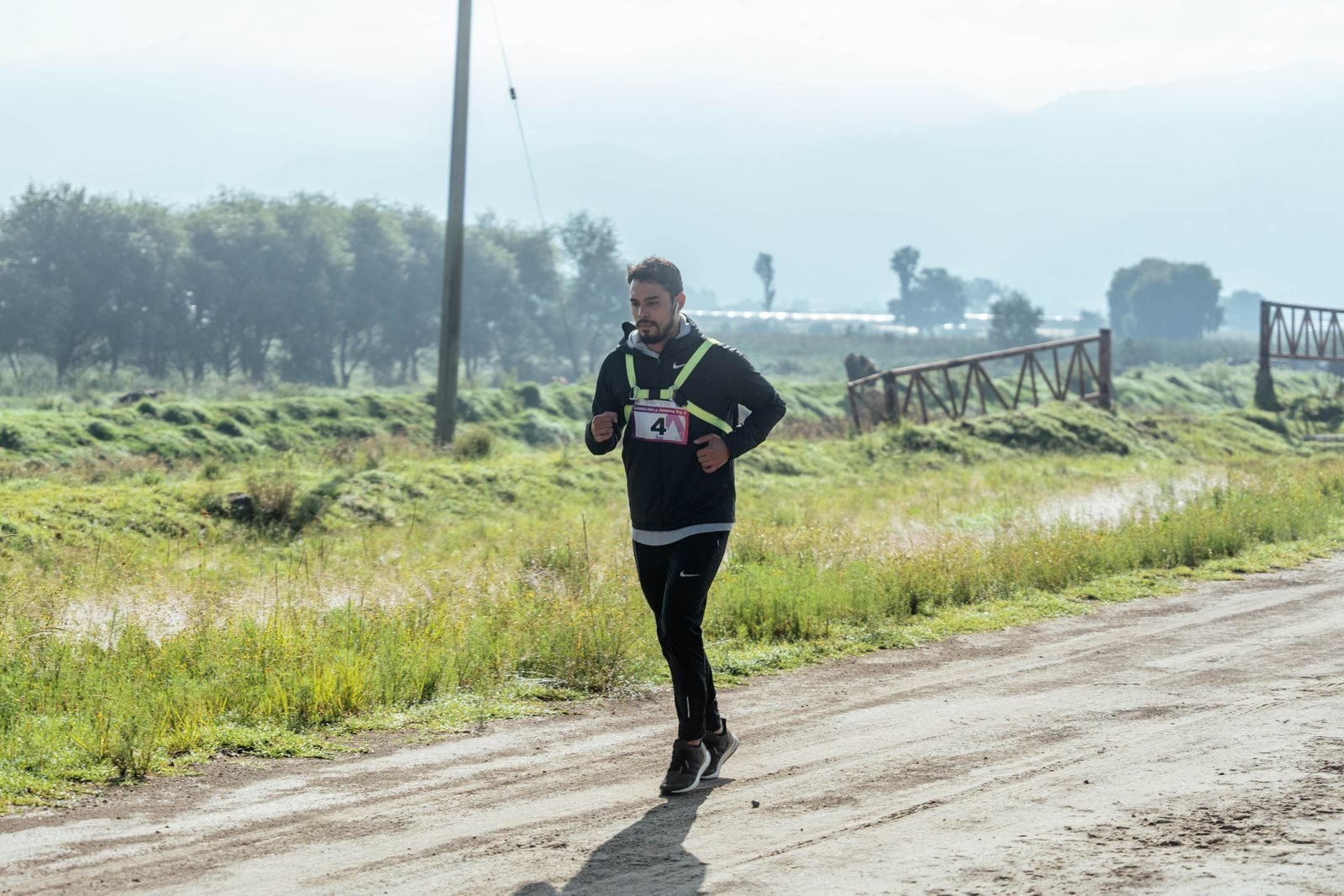
The study only used the Stryd. Other watches and sensors also report contact time, but their numbers need not match, so always compare readings from the same device. If you are shopping for one, see the GPS running watch guide.
Limitations
Twelve runners is a small sample for a running durability study, and men and women were analysed together. There was no technical terrain or downhill running, and the Stryd’s metrics are validated at moderate intensities, not in near-maximal efforts under fatigue. The authors report no conflicts of interest.

Frequently asked questions
What is running durability?
It is the ability to hold your performance as effort accumulates. Two runners with the same fresh VO2max can perform very differently in the third hour, and that difference is their running durability.
What is duty factor?
It measures how much of each stride you spend on the ground compared with in the air. When it rises, you are running closer to the ground, which in this study came with fatigue.
Does power measure running durability?
For mechanical wear, not much: it fell in step with speed. For knowing how much maximal performance is left, yes, because runners stayed close to their critical power.