Threshold Training: What It Is, How to Find Your Pace and the Best Sessions
Threshold training is probably the session with the best ratio of effort to benefit that a distance runner can do. It isn’t as hard as short intervals or as easy as an easy run, and it improves exactly what you need in a 10K, half marathon or marathon: the ability to hold a fast pace without fatigue taking over. In this guide I explain what the threshold is, how to find your pace, which sessions to do and the mistakes that turn a good threshold session into a pointless beating.
What the threshold is
When you run easy, your body produces lactate and recycles it without trouble. As you speed up, you reach a point where you produce it faster than you can clear it, and from there fatigue accelerates. That point is known as the lactate threshold.
In practice, threshold pace is the pace you could hold for about an hour in a race. It is the famous “comfortably hard”: you are working, but in control, and you could say short phrases but not hold a conversation. If you train right there, your threshold moves to faster paces and you can last longer at speeds that used to leave you gasping.
If you want to see how it fits with the other zones, I explain it in the guide on training paces, and the lactate side in the one on how to train in zone 2.
How to find your threshold pace
There are several ways, from most to least precise.
The most reliable without a lab is to start from a recent race. As a reference, your threshold pace is usually 15 to 20 seconds per kilometer slower than your 10K pace. If you run your 10K at 5:00, your threshold will be around 5:15-5:20. The training pace calculator gives it to you directly.
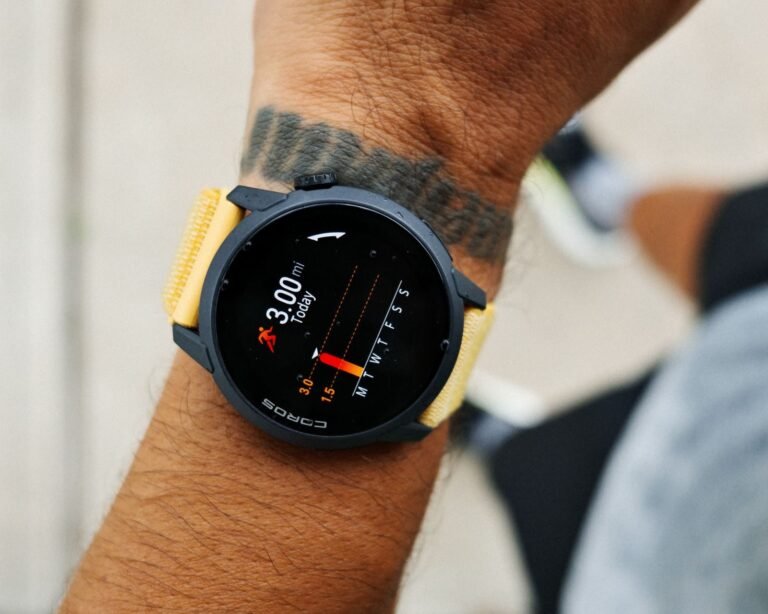
By heart rate, threshold usually falls around 85-90% of your maximum; you can work out your zones with the heart rate zone calculator. And by feel, it is an effort of 7 out of 10: hard, but sustainable.
The best threshold training sessions
Continuous tempo
20 to 30 minutes non-stop at threshold pace, with 10 to 15 easy minutes to warm up and the same to cool down. It is the simplest session and one of the most useful.
Threshold intervals
Splitting the work into blocks lets you build more time at that pace with less fatigue. Some examples: 4 to 5 x 1,600 m with 1 minute of recovery, 3 x 10 minutes with 2 easy minutes or 2 x 15 minutes with 3 minutes. The recovery is short on purpose: you aren’t trying to recover fully, just to bring your heart rate down a little.
Progression runs
A 40 to 50 minute run where the last 15 to 20 are at threshold pace. It is a good way to introduce threshold work if you have never done it, and to practice finishing strong.
How much threshold training to do
One threshold session a week is enough for most recreational runners, alternating it with intervals if you are training for a 10K. As a reference, the total time at threshold pace in one session shouldn’t go beyond about 30 to 40 minutes, or 10% of your weekly volume.
Some methods, like the Norwegian one, do two threshold sessions on the same day while controlling lactate very precisely. It is interesting, but it is designed for athletes with high volume and lab measurements; for the recreational runner, one well-run weekly session gives almost all of the benefit.

Common threshold mistakes
The first, by a long way, is going too fast. If you run your tempo at 10K pace, it is no longer threshold: you build up much more fatigue and lose exactly the effect you want. Finish each session feeling you could have done one more block.
The second is doing threshold work on hills or in wind without adjusting the pace. In those cases, go by effort or heart rate. And the third is putting it right next to intervals or the long run; leave at least one easy day between hard sessions. If fatigue builds up and aches appear, check the guide on runner injury prevention.
Conclusion
Threshold training means running at the pace you could hold for an hour in a race, 15 to 20 seconds per kilometer slower than your 10K. Do it once a week with 20 to 30 minute tempos, threshold intervals or progression runs, and resist the urge to go faster. It is one of the sessions that pays off most for the 10K, the half marathon and the marathon. Choose well, run better.
Frequently asked questions
What is threshold training?
It is running at the pace you could hold for about an hour in a race, the point where lactate starts to build up. It improves your ability to sustain fast paces without tiring.
How do I calculate my threshold pace?
From a recent race: it is usually 15 to 20 seconds per kilometer slower than your 10K pace. You can also go by heart rate, around 85-90% of your maximum.
How often should I do threshold training?
Once a week is enough for most recreational runners. Time at threshold pace in each session shouldn’t go beyond about 30 to 40 minutes.
What is the difference between tempo and threshold?
In practice they are used almost as synonyms. Tempo usually refers to a continuous block at threshold pace, while threshold work can also be done as intervals with short recoveries.
Is threshold training useful for the marathon?
Yes, very. Marathon pace sits a little below threshold, so raising your threshold makes marathon pace feel easier.