Treadmill Running vs Running Outside: Differences and How to Use It Well
Treadmill running has a bad reputation among many runners, but it is a very useful tool when it is raining, very hot, dark or you simply want to control your pace to the second. Is it the same as running outside? Not quite, although the differences are smaller than they seem and you can compensate for them. In this guide I explain how treadmill running differs from running outdoors, how to set the incline, which workouts make the most of the treadmill and how to combine both.
Differences between treadmill running and running outside
The main difference is air. When you run outside you have to push against air resistance, and on a treadmill you don’t. On top of that, the treadmill moves the ground under your feet, so the push-off is slightly different. That is why, at the same pace, treadmill running usually costs a bit less.
Another difference is the terrain. Outside there are bends, hills, descents, wind and changes of surface, and all of that works your muscles and tendons in different ways. On a treadmill, every stride is almost identical to the last. Heat also plays a part: with no breeze to cool you, you sweat more indoors and your heart rate can climb.
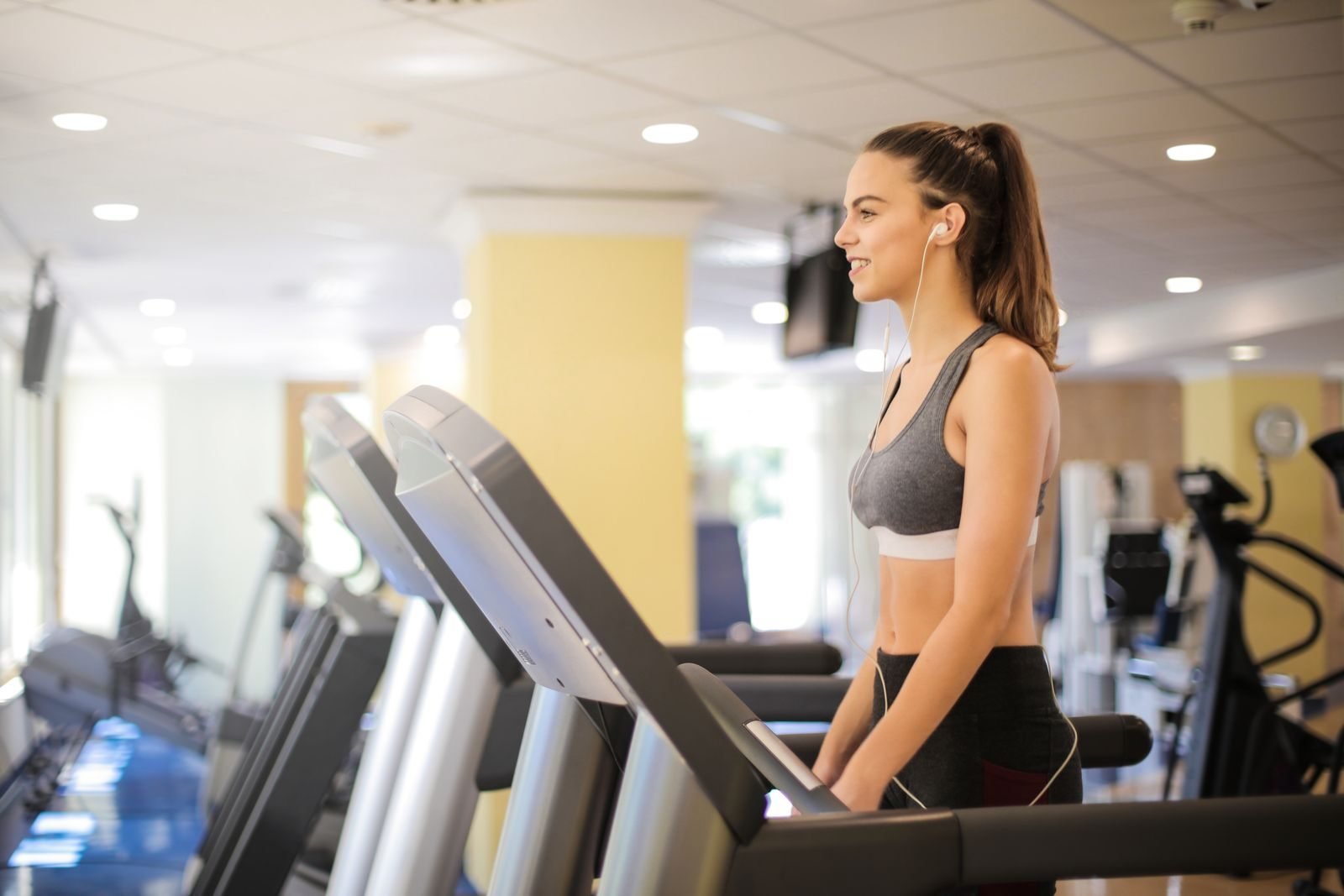
The 1% incline
A classic study published in the Journal of Sports Sciences found that setting the treadmill to a 1% incline matches the energy cost of running outdoors quite well, at usual training paces. It is the most widely used recommendation.
At very slow paces the difference is minimal and you can leave it flat, and at fast paces air resistance matters more. For most sessions, 1% is a good starting point.
Advantages of treadmill running
The first is control: the pace is exactly what you set, ideal for intervals or tempos at a specific pace. The second is comfort and safety: you avoid rain, extreme cold, heat or darkness. And the third is that you can do hill work even if you live somewhere flat.
Many treadmills also have a slightly more cushioned surface than asphalt, although the difference is small. What does help is that the surface is even, which is useful if you are coming back from an ankle injury.
Disadvantages of treadmill running
Boredom is the main one for many people. Another is that it doesn’t prepare you for real terrain: if your race has hills, bends or wind, you need to train outside. And the speed shown on many treadmills isn’t well calibrated, so the pace you see may not be accurate.
Finally, running on a treadmill for a long time and switching suddenly to the road, or the other way round, can overload your calves or tendons because of the change in movement. Alternate both so your body gets used to each.

The best treadmill running workouts
Intervals are perfect on a treadmill, because you hold the pace without thinking. For example, 6 x 1,000 m at 10K pace with 2 easy minutes. To find your pace, use the training pace calculator, and if the treadmill shows km/h, convert it with the pace converter.
Tempo or threshold runs also work very well: 20 to 30 minutes at a steady pace. I explain it in the guide on threshold training. And hills: blocks of 1 to 2 minutes at a 4 to 6% incline, dropping back to flat to recover.
Long easy runs are the most boring on a treadmill. If you do them, put on a series or a podcast, and change the incline now and then to vary the movement.
How to combine treadmill and outdoor running
Ideally, use the treadmill as support, not as a full replacement. Do your quality sessions on it when the weather is bad, and keep the long run and easy runs for outside, especially if you are preparing a road or trail race. In the weeks before a race, try to do most of your sessions outdoors.
Conclusion
Treadmill running is a good alternative to the road, with a 1% incline to make up for the lack of air resistance and the advantage of controlling your pace to the second. Use it for intervals, tempos and hills when the weather is bad, alternate with outdoor runs so you don’t lose your adaptation to real terrain and don’t fully trust the speed it shows. Choose well, run better.
Frequently asked questions
Is treadmill running the same as running outside?
Not exactly. On a treadmill there is no air resistance or change of terrain, so it costs a bit less at the same pace. With a 1% incline the difference shrinks a lot.
What incline should I use for treadmill running?
1% is the most widely used recommendation to match the effort of running outdoors at usual training paces.
Is treadmill running better for your knees?
The surface is usually slightly softer and even, but the difference in impact is small. What protects your knees most is increasing volume gradually and doing strength work.
What workouts are best for treadmill running?
Intervals, threshold tempos and hills, because the treadmill holds the exact pace and incline.
Can I train for a race only with treadmill running?
You can, but it isn’t ideal. It is worth doing at least the long run and some sessions outdoors so your body adapts to terrain, bends and wind.