How to Choose a GPS Running Watch: What Matters and What You Can Skip
Choosing a GPS running watch can be overwhelming: there are dozens of models, each with a huge list of features and prices that range from under 150 to over 800 euros. Luckily, for most runners only a few things matter. In this guide I explain what to look for when buying a GPS running watch, which features you can skip and how to get the most out of it without obsessing over data.
What a good GPS running watch should do
The basics are measuring distance, pace and time accurately, and having a battery that lasts your longest runs with room to spare. Everything else is secondary. If a watch fails at that, it doesn’t matter how many advanced metrics it has.
GPS accuracy
Watches use several satellite navigation systems (GPS, Galileo, GLONASS, BeiDou). Models with multi-band or dual-frequency GPS are much more accurate in cities with tall buildings, forests and mountains, where the signal bounces around.
If you run mostly in open areas, a standard watch will do. If you train in a city or in the mountains, multi-band is worth it. And remember no watch is perfect: instant pace jumps around, so for intervals look at the average lap pace. I explain it in the guide on pace and speed.

Battery
Look at battery life in GPS mode, not in watch mode. For most runners, 15 to 20 hours of GPS is more than enough. If you do ultras or long trail runs, look for 30 hours or more, or power-saving modes.
Heart rate: wrist or chest strap
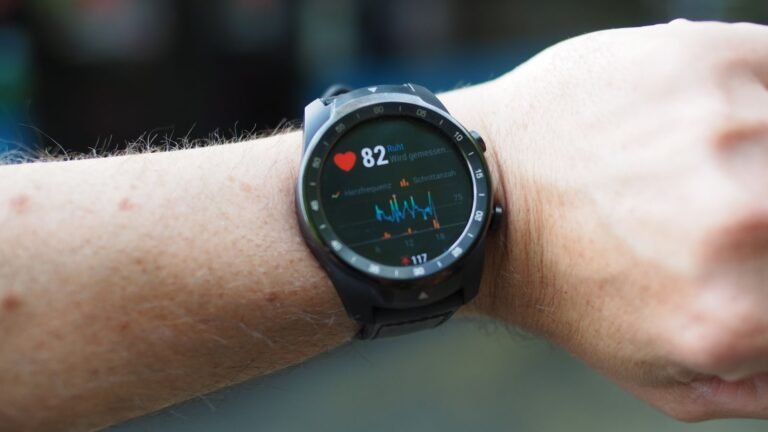
Almost all watches measure heart rate at the wrist. It works reasonably well on easy runs, but it is less reliable in intervals and changes of pace. If you train by heart rate zones, a compatible chest strap gives much more reliable data. I explain it in the guide on max heart rate.
Useful training features
The ones you will use most are programming workouts with intervals and zones, automatic lap alerts every kilometer, pace or heart rate alerts, and syncing with apps like Strava or the brand’s own. It also helps if it records cadence, which I cover in the guide on running cadence.
Other metrics, like estimated VO2 max, training load, heart rate variability or recovery time, are interesting for spotting trends, but don’t obsess over them. I explain them in the guides on VO2 max and resting heart rate.

Features you can skip
If you don’t run in the mountains, maps and advanced navigation push the price up a lot without giving you anything. Music, contactless payments or the latest displays are conveniences, not training tools. Think about what you will use before paying for it.
Comfort, size and price of a GPS running watch
A watch that is heavy or too big for your wrist ends up bothering you on long runs. If you can, try it on. Physical buttons are easier to use while running and with gloves than touchscreens.
As for price, as a rough guide, the entry level (about 150 to 250 euros) already gives you good GPS, heart rate and programmable workouts. The mid range (250 to 450 euros) usually adds multi-band, more battery and better metrics. And the high end adds maps, music and premium materials. If you are looking for a bargain, check our deals section.
Conclusion
To choose a GPS running watch, prioritize accurate GPS (multi-band if you run in cities or mountains), enough battery for your longest runs, programmable workouts and comfort. Use a chest strap if you train by heart rate, look at average lap pace for intervals and don’t pay for features you won’t use. Choose well, run better.
Frequently asked questions
Which GPS running watch should I buy as a beginner?
An entry-level one with good GPS, wrist heart rate, enough battery and the option to program workouts. You don’t need maps or advanced features at first.
Do I need multi-band GPS?
Only if you run a lot in cities with tall buildings, forests or mountains, where the signal bounces. In open areas, standard GPS is enough.
Is the heart rate on my watch accurate?
On easy runs it is usually reasonably reliable. In intervals and changes of pace it is less accurate; to train by heart rate, a chest strap is better.
How much battery does a GPS running watch need?
For most runners, 15 to 20 hours in GPS mode is enough. For ultras or long trail runs, look for 30 hours or more.
Is the pace on my watch accurate?
Instant pace jumps around because of the GPS signal. To control intervals or long runs, use average lap pace and remember that in races GPS usually measures a little extra distance.