Downhill Running: Technique to Descend Fast Without Wrecking Your Legs
Downhill running looks easy: gravity works for you and your heart rate drops. Yet descents are what punish your legs most in a mountain race or a hilly course, and also where you gain or lose the most time. This guide explains why they hurt so much, how to descend with good technique and how to train for them so you finish with legs left.
Why downhill running wrecks your quads
When you descend, your muscles brake your body with every step instead of pushing it forward. Your quadriceps lengthen while they produce force, which is called an eccentric contraction, and that kind of work causes the most muscle damage. That is why, after a race with a lot of descent, the soreness appears the next day and is worst at around 48 hours.
A review by Vernillo and colleagues on the biomechanics of uphill and downhill running sums up what changes on a descent. Cadence drops, you spend more time in the air and you tend to land on your heel. Energy cost falls as the slope gets steeper down to about 20%. Beyond that it rises again, because braking costs energy too.
Downhill running technique
Short, quick steps
The most common mistake is to lengthen your stride and land with your heel far in front of your body. Every step like that is a brake that loads your knee and quads. Shorten your stride and raise your step rate: short, quick steps give you better speed control and softer impacts. For more on step rate, read the guide to running cadence.
Lean slightly forward
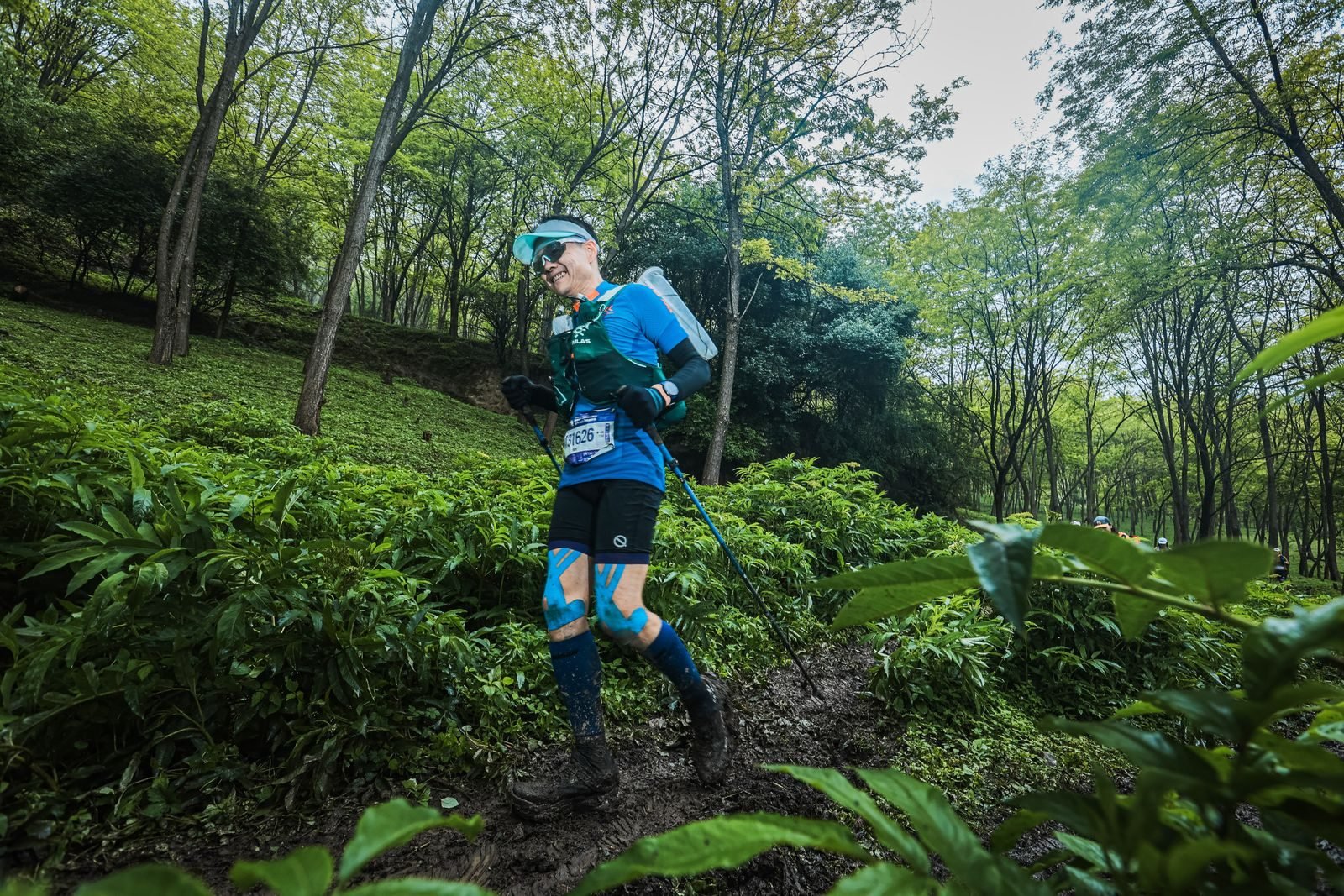
On a descent, the instinct is to lean back to slow down. That makes your foot land further ahead and brake on every step. Try to keep your trunk perpendicular to the slope, leaning slightly forward compared with how you would run on the flat. It feels scary at first; with practice you will notice you descend more freely.
Eyes ahead, arms out
Look two or three metres ahead, not at your feet, so you choose where to land before you get there. Open your arms a little: they help you balance on uneven ground and recover if a foot slips.
Stay relaxed
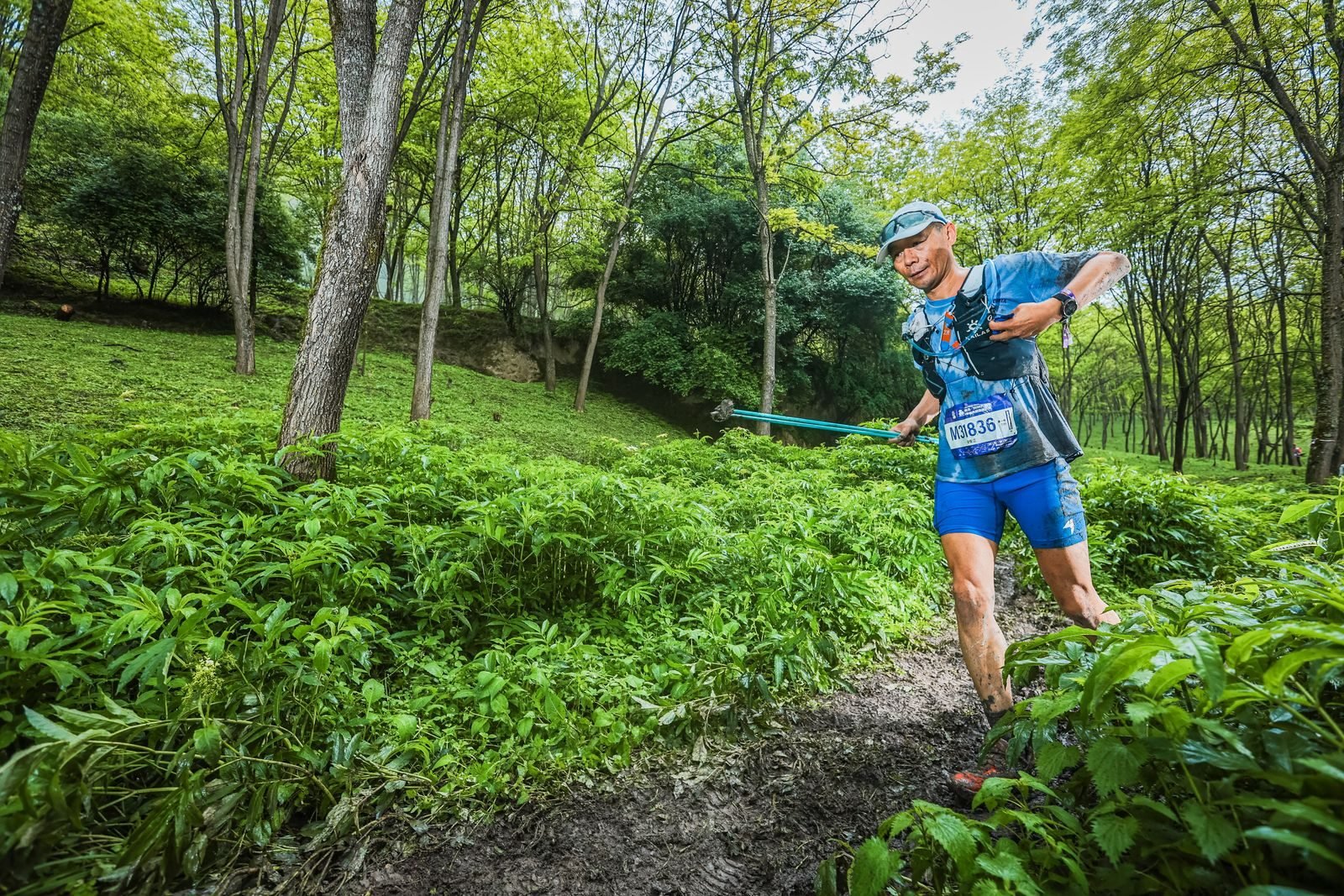
Descending tense is more tiring and raises the risk of a fall. Keep your shoulders loose, your knees slightly bent to absorb impact and your breathing calm. On very technical descents there is nothing wrong with walking: it is safer and sometimes just as fast.
How to train for downhill running
Your body adapts quickly to descents. In a classic study by Byrnes and colleagues, a single 30-minute downhill run greatly reduced soreness and markers of muscle damage when the same session was repeated 3 or 6 weeks later. At 9 weeks, the protection had gone. This is known as the repeated bout effect.
In practice, it means you need to descend regularly, not just on race day. Some ideas:
- Short descents on your easy runs: find a 100 to 200 metre hill and run down it several times with good technique, at a controlled pace.
- Long runs with climbing: if you are preparing a mountain race, make your long runs include the same kind of descents you will find in the race.
- Progression: start with gentle slopes and a few minutes of descent, and build up each week. The first session will make you sore; the next ones, much less.
- Eccentric strength: slow squats, reverse lunges and stepping down stairs slowly prepare your quads for braking. There is a routine in the guide to strength training for runners.
Hill sessions work for both: you climb hard and descend practising technique. See how to organise them in the hill training guide.
Downhill running in a race
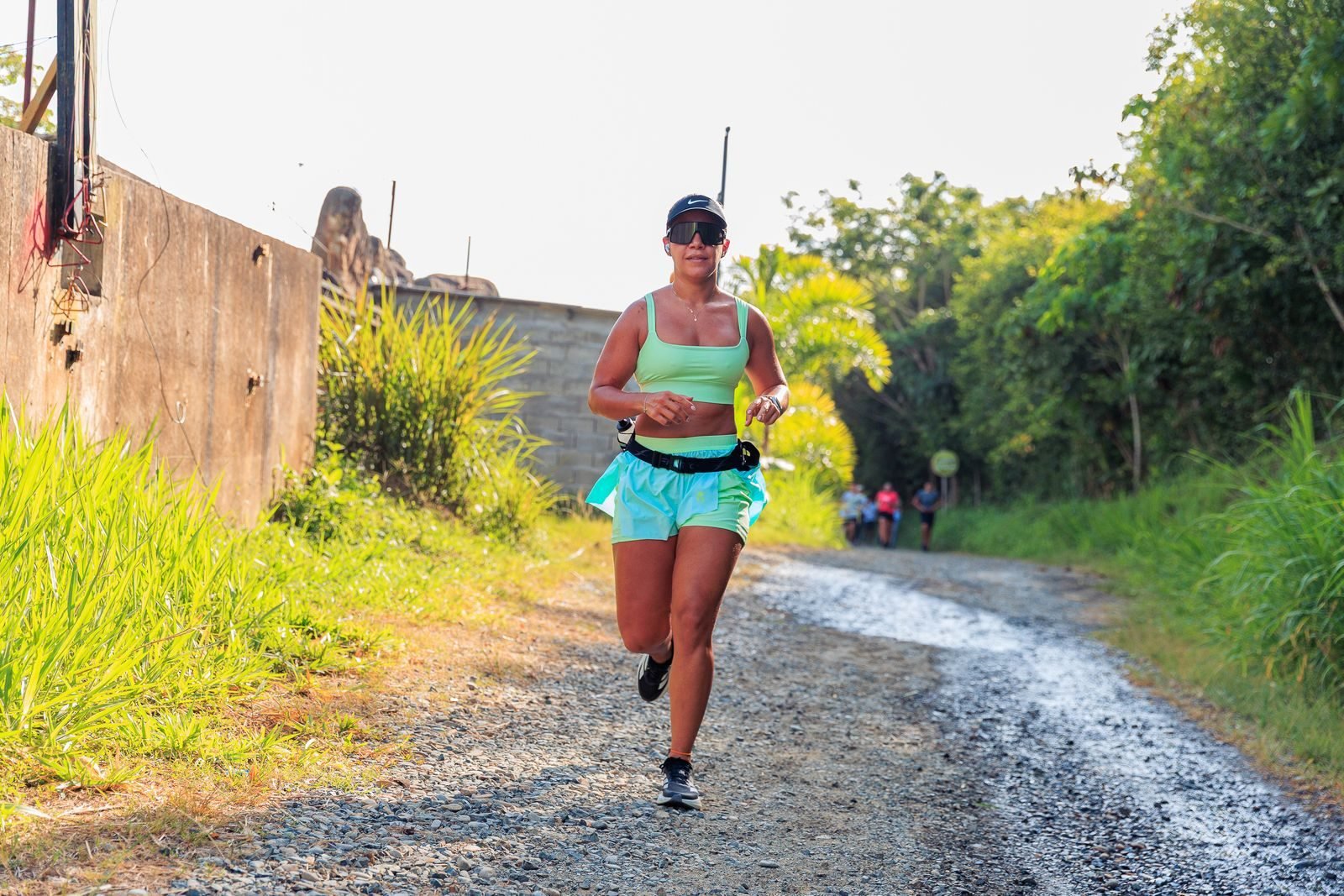
If your race has a long descent at the end, save your legs on the climbs. Many runners reach the last descent exhausted and lose everything they gained before. Descend with short steps, without braking sharply, and use the easy sections to shake out your legs.
Footwear matters too. On loose rock or muddy descents, shoes with good grip give you far more confidence; the guide to trail running shoes explains which lugs suit each terrain. And if you are preparing your first mountain race, the guide to your first trail race covers everything else.
Knees and downhill running
Descents put a lot of load on the front of the knee. If it hurts going down stairs or hills, it may be patellofemoral pain; read the guide on knee pain from running. Shortening your stride, building strength and increasing descents gradually help the most.
Conclusion
To get better at downhill running, shorten your stride, raise your cadence, keep your body slightly forward and look ahead of your feet. Descending regularly in training is what reduces soreness the most, because your body protects itself after the first session.
FAQ
Why do my legs hurt so much after downhill running?
Because on a descent your quads brake your body while lengthening, an eccentric contraction that causes more muscle damage than flat or uphill running. Soreness is usually worst at about 48 hours.
How do you run down a hill?
With short, quick steps, your trunk slightly forward, your eyes two or three metres ahead and your arms a little open for balance. Avoid leaning back and braking with your heel.
How can I avoid soreness from downhill running?
By training descents regularly. A single downhill session protects against soreness for several weeks, so include them in your training instead of saving them for race day.
Is downhill running bad for your knees?
Not if you use good technique and increase the load gradually. Descents do load the knee more than flat running, so if you already have pain, reduce the amount of descending and work on strength.
Is it better to walk on very technical descents?
On very steep descents or loose rock, walking is often safer and sometimes almost as fast. There is nothing wrong with it, especially in your first mountain races.