Running Cadence: What It Is, the 180 Myth and How to Improve It
Running cadence is the number of steps you take per minute, and in recent years it has become one of the most talked-about metrics thanks to GPS watches. You have probably heard that the ideal is 180 steps per minute. The reality is more nuanced: there is no magic number for everyone, but raising your cadence a little can help you run with less impact. In this guide I explain what it is, where the famous 180 comes from, how to measure yours and how to raise it without spoiling the way you run.
What running cadence is
It is the number of steps you take in a minute, counting both feet. Together with stride length, it determines your speed: to go faster you can take longer strides, more steps per minute or, usually, a bit of both.
That is why cadence changes with pace. On an easy run you might be at 160 or 165, and in a fast interval at 180 or more. Your height and leg length also play a part: a tall person usually has a slightly lower cadence at the same speed.
The 180 steps per minute myth
The number comes from coach Jack Daniels, who counted the steps of elite runners at the 1984 Olympic Games and saw that almost all of them were above 180. The catch is that they were elite athletes running at very fast race paces.
For a recreational runner at an easy pace, 180 isn’t a required target. Forcing it can make you take artificial little steps and waste energy. What does make sense is checking whether your cadence is particularly low and, if so, raising it a little.
Why raising your cadence a little helps
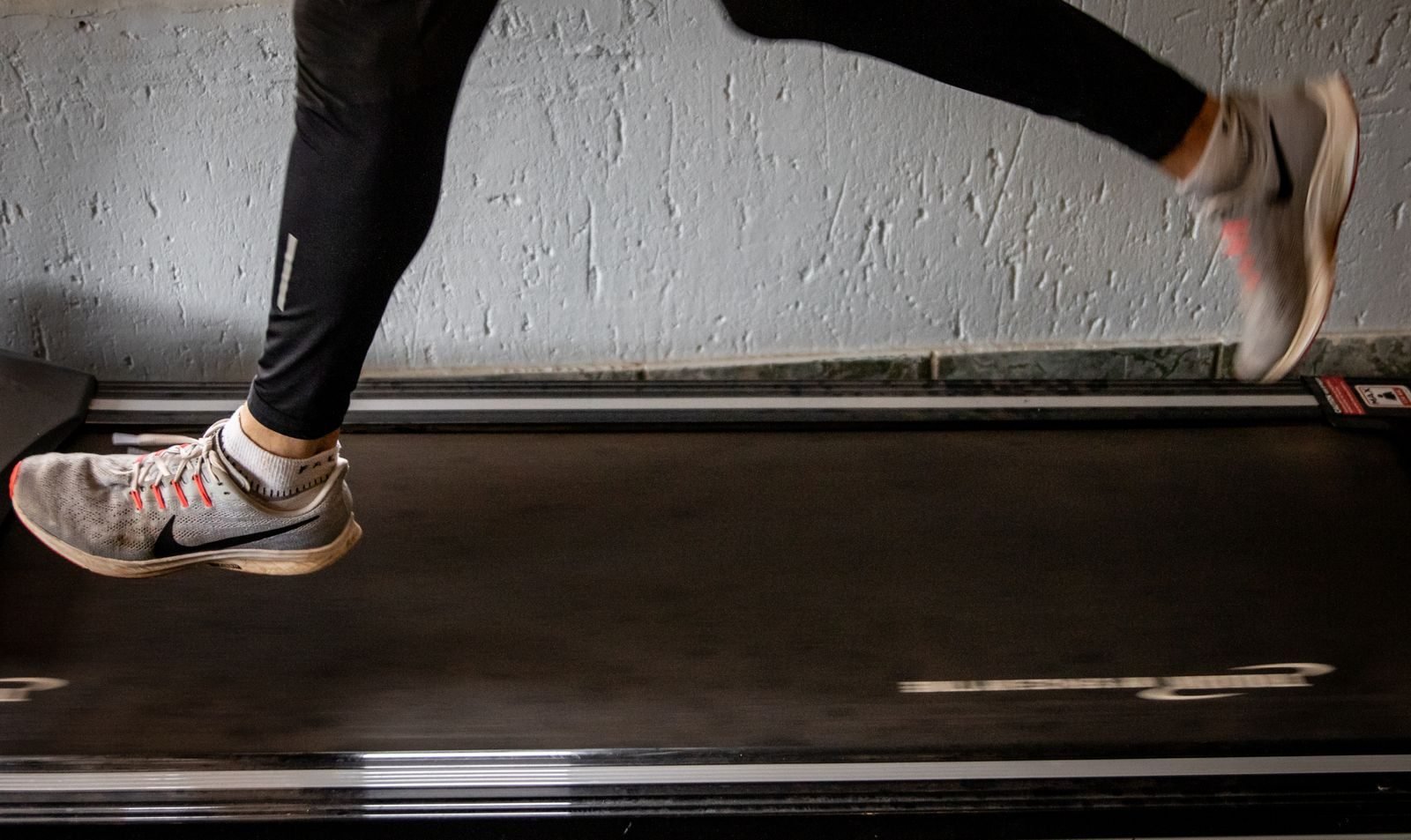
When your cadence is low, you tend to take long strides and land with your foot well in front of your body, with your leg straight. That acts as a brake with every step and increases the impact on your knees and hips.
A study published in Medicine & Science in Sports & Exercise found that increasing running cadence by 5 to 10% at the same speed noticeably reduced the load on the knee and hip. That is why it is one of the most common corrections for runners with knee pain. If you are interested in prevention, there is more in the guide on runner injury prevention.
How to measure your running cadence
Most GPS watches measure it directly, in steps per minute. If yours doesn’t, count how many times your right foot hits the ground in 30 seconds and multiply by 4.
Measure it on an easy run, on flat ground and at your usual pace. As a rough reference, if you are below 155 to 160 steps per minute at an easy pace, you probably have room to raise it.
How to increase your running cadence
Raise it gradually
The goal is 5% more, not jumping to 180. If you are at 160, try 168. Once it feels natural, after a few weeks, you can raise it a bit more if you think you need to.
Use a metronome
Many watches and apps have a metronome, and there are music playlists at just the right tempo. Run a few minutes to the beat several times per session until the new rhythm comes on its own.
Shorter steps, not faster running
It should feel like taking shorter, lighter steps, with your foot landing closer to under your body. The idea is to spread the same speed over more steps without running faster.
Use other exercises
Short strides, hills and drills (high knees, butt kicks) make a higher cadence come naturally. And strength in your calves and glutes helps you hold it when fatigue sets in.

Mistakes when changing your running cadence
The first is trying to change it all at once. A big change alters how your muscles and tendons work, and can bring calf or Achilles overload. The second is obsessing over the number for the whole run; practicing in short spells until it becomes automatic is enough.
And the third is changing your cadence if you don’t have a problem. If you run comfortably, without aches, and your cadence is in a normal range, there is no need to change anything.
Conclusion
Running cadence is the number of steps per minute, and there is no ideal number for everyone: the 180 comes from elite athletes at race pace. Measure yours on an easy run and, if it is low or you have knee pain, raise it by 5% with shorter steps, a metronome and some drills and hills. Do it gradually and let it become automatic. Choose well, run better.
Frequently asked questions
What is the ideal running cadence?
There is no single number. It depends on your speed, height and running style. On easy runs it is normal to be between 160 and 175 steps per minute, and higher at fast paces.
Do I need to run at 180 steps per minute?
Not necessarily. It is a number observed in elite athletes at race pace. For most recreational runners at an easy pace, forcing it brings no benefit.
How can I increase my running cadence?
Raise it 5% above your current cadence with the help of a metronome, taking shorter, lighter steps. Practice in short spells over several weeks until it comes naturally.
Does a higher cadence reduce injuries?
Raising it by 5 to 10% reduces the load on the knee and hip, which is why it is used for runners with knee pain. It isn’t a universal fix, but it can help if your cadence is low.
Does cadence change with pace?
Yes. The faster you go, the higher your cadence. That is why you should always compare it at a similar pace, for example on your easy runs.