Breast Pain When Running: Study of 15 Women Points to Breast Movement Rather Than the Menstrual Cycle
Breast pain when running depends mainly on how much the breasts move with each stride, and the phase of the menstrual cycle changes little. That is the finding of a University of Portsmouth study published on 16 October in the Journal of Science and Medicine in Sport, in which 15 women ran on a treadmill six times across a full cycle. Breast pain rose by half a point in the days before menstruation, but hormones did not explain it: the best predictors were the up and down and side to side accelerations of the breasts.
How the breast pain study was run
The authors are Jonathan White, Joanna Wakefield-Scurr and colleagues at the University of Portsmouth, with one researcher from The Well HQ and two from Lululemon Athletica, the Canadian sportswear brand. They declare no competing interests.
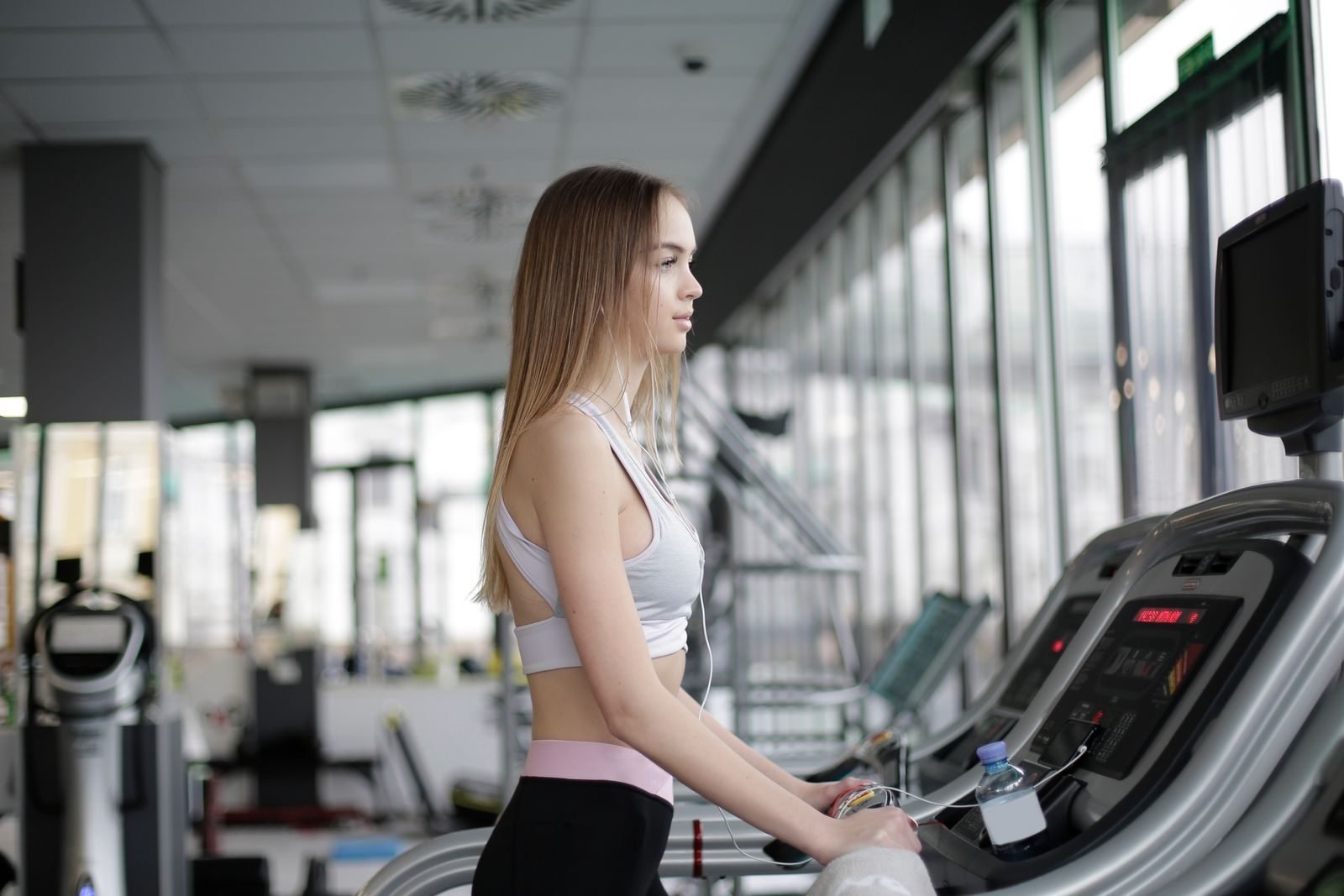
The 15 participants wore bra sizes between 34C and 36B, so mid-range sizes. Each visited the lab six times, at key points of the cycle confirmed with hormone testing. At every visit they ran bare-breasted on a treadmill at 10 km/h, so the researchers could measure real breast movement, and rated their breast pain. Breast volume was measured with a 3D scanner, and oestradiol and progesterone with saliva samples taken at and between visits.
What they found
Breast pain was more often rated higher three days before menstruation and on day two of the next cycle (5 out of 10) than on day two of the first cycle (4.5 out of 10). Three days before menstruation the breasts were 7.3% larger than at ovulation, but that increase did not predict how much they hurt.
Oestradiol and progesterone levels did not predict pain either. Breast kinematics did, at every phase of the cycle: vertical and side to side accelerations were the strongest predictors. Side to side movement also changed across the cycle compared with three days before menstruation.
The authors conclude that running-related breast pain is driven by mechanical rather than hormonal factors. They saw small cycle-related changes in pain, volume and movement, but judged them not practically meaningful and not consistently linked.
A common problem for female runners
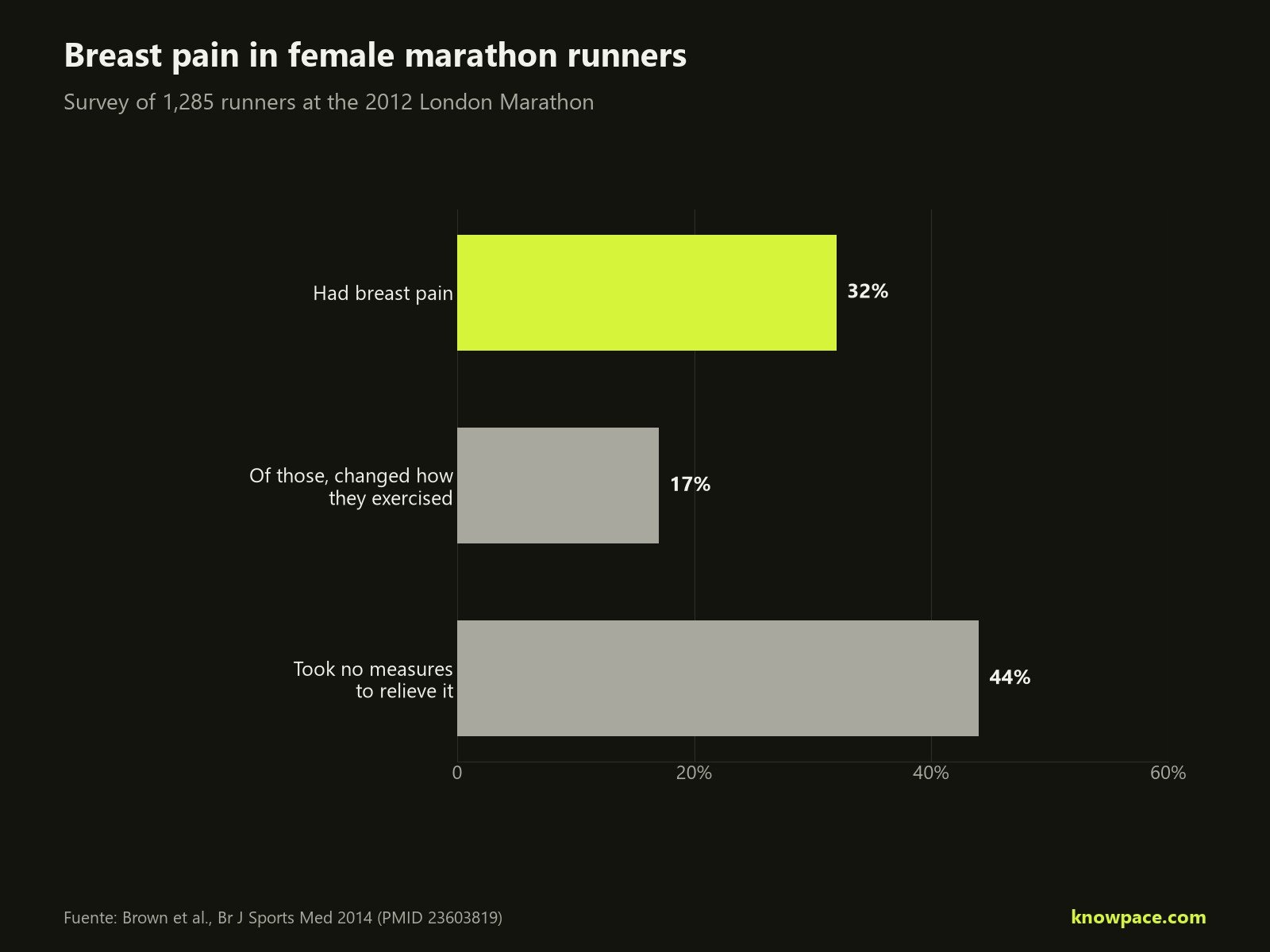
A survey by Brown and colleagues (St Mary’s University, London), published in 2014 in the British Journal of Sports Medicine, questioned 1,397 women at registration for the 2012 London Marathon and analysed the 1,285 who completed it. 32% had breast pain, which was linked to cup size and was worse during vigorous than moderate activity. 17% of those affected said it had changed how they exercised, and 44% of participants took no measures to relieve it. Those who did act mostly used painkillers or firm support.
A later paper by Brown with the University of Portsmouth breast health group compared 234 of those marathon runners with 234 age-matched women from the general population. Breast pain was less common among the runners (32.1% vs 43.6%), although it was just as severe when it occurred. The runners wore sports bras more often but were less likely to get a professional fitting.
How much the breasts move when you run
A 2011 Portsmouth study with 21 D cup women measured how much they move. Without a bra, total breast displacement went from 4.2 cm when walking to 15.2 cm when running. Above 10 km/h it did not increase further, and vertical movement made up about half of the total. A bra reduced how far the breasts moved but not the direction.
The new study, run bare-breasted at 10 km/h, fits those figures: it measured free breast movement at a speed where displacement has already peaked.

What to do if your breasts hurt when you run
If accelerations predict breast pain, the logical step is to reduce them with a well-fitted, supportive sports bra. The 2016 paper by Brown and Portsmouth notes that the literature already recommends one for women with symptoms. This study did not compare bras, so it cannot say which works best, but it suggests the menstrual cycle should not change your choice much, because the differences between phases were small.
If you notice more pain in the days before your period, the average difference in the study was half a point out of 10, so checking your support will do more than moving sessions around your cycle. And if pain is making you run less, 17% of the marathon runners with breast pain in the London survey said the same; with larger cup sizes support matters even more, because pain was linked to cup size.
High support sports bras for running
The study did not test any model, so there is no winner. What these papers do suggest is to look for the high support category, which brands design to limit breast movement when running, and to get the size right. These three were in stock at BIKILA at the end of October.
The Nike Indy Support Bra is high support according to Nike, with a snug fit that keeps movement to a minimum, and comes in clothing sizes.
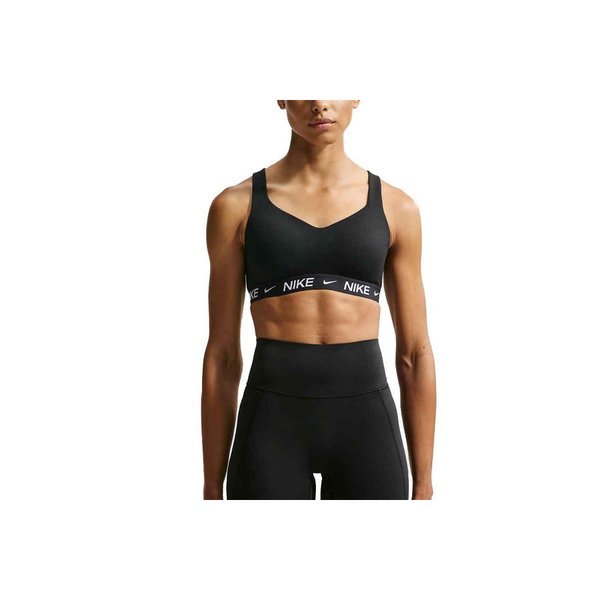
Nike Indy Support Bra
High support · sizes S, M and L
from €54.85
BIKILA price on 30/10/2026; may change
See it at BIKILA →The ASICS Road Combination Bra is sold by band and cup size, from 34C to 38C, a range that covers the sizes in the Portsmouth study. It has moulded cups that hold each breast separately.
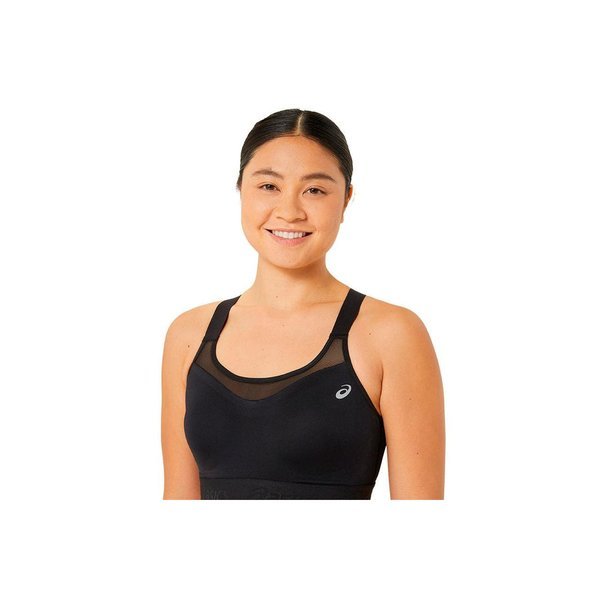
ASICS Road Combination Bra
High support · band and cup sizing
from €39.95 €50.00 -20%
BIKILA price on 30/10/2026; may change
See it at BIKILA →For larger cups, where breast pain was more common in the London survey, the Nike Alpha Bra offers Nike’s highest level of support, with compression and sizing for D and E cups.
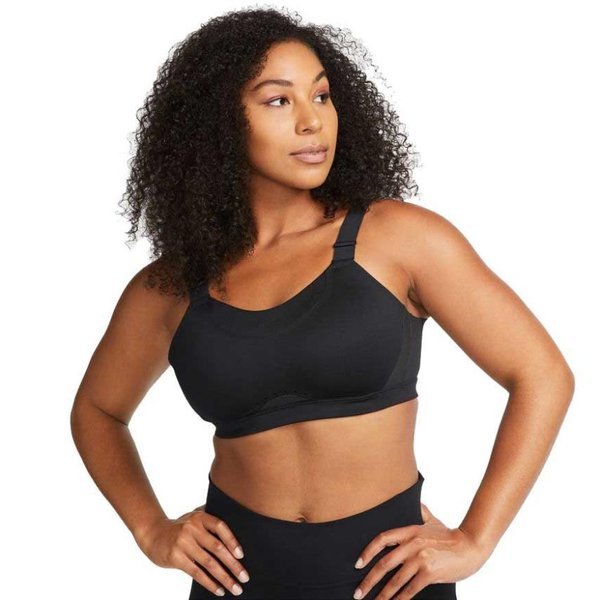
Nike Alpha Bra
Maximum support · D and E cups
from €34.95 €59.95 -42%
BIKILA price on 30/10/2026; may change
See it at BIKILA →There are more models in BIKILA’s sports bra section. Prices are from 30 October 2026 and may change.
Our running clothes guide has more on choosing a sports bra, and if you are just starting out, how to start running covers the rest of the basic kit. We also covered another recent study run only with female amateur runners, on sodium bicarbonate in the 10K.

Study limits
The sample is 15 women with mid-range sizes, so the results cannot simply be applied to larger sizes, where pain was more common in the London survey. Participants ran only at 10 km/h and on a treadmill. Two of the seven authors work for Lululemon, which sells sports bras, although the study’s conclusion does not mention any product. The figures in this article come from the abstract on PubMed, and the full paper may contain details it leaves out.
Frequently asked questions
Why does my chest hurt when I run?
According to this study, breast pain when running is linked to vertical and side to side breast accelerations rather than to menstrual cycle hormones.
Is breast pain worse before your period?
Slightly. Pain was rated 5 out of 10 three days before menstruation, against 4.5 at another point of the cycle. The authors consider the change not practically meaningful.
How many female runners get breast pain?
In the 2012 London Marathon survey of 1,285 runners, 32% did.
Does a sports bra help with breast pain?
It reduces how much the breasts move when you run, which is what predicted pain in this study, and the literature recommends one for women with symptoms.
Sources: White et al., J Sci Med Sport, 2026 (abstract on PubMed), Brown et al., Br J Sports Med, 2014, Brown et al., Breast J, 2016 and Scurr et al., J Sports Sci, 2011.
Some links in this article are affiliate links: if you buy through them, KnowPace may earn a small commission at no extra cost to you. We have not tested these bras: the data comes from the brands and BIKILA.