Running Shoes for Heavy Runners: What to Look For and 6 Models
If you weigh more than the average runner and are looking for running shoes for heavy runners, the first thing you will be told is to buy maximum cushioning. That makes sense for comfort, but the research is more nuanced. This guide covers what is known about body weight, cushioning and injuries, what to look for in running shoes for heavy runners, and six models with their specs and prices.
What counts as a heavy runner?
There is no official figure. Brands talk about “heavier runners” without giving a number, and each study uses its own cut-off. In the Malisoux trial described below, runners were split at the group median: 78.2 kg for men and 62.8 kg for women.
When choosing running shoes for heavy runners the label matters little: the more you weigh, the more load the midsole takes on every step, and that changes how the shoe feels and how long it lasts.
What the research says about weight and cushioning
More cushioning did not protect heavier runners
The most cited trial is by Malisoux and colleagues (American Journal of Sports Medicine, 2020). They followed 848 recreational runners for six months, randomly giving them either a soft or a hard shoe.
- Across the whole group, the hard shoe carried 52% more injury risk than the soft one.
- In lighter runners the gap was bigger: 80% more risk with the hard shoe.
- In heavier runners the difference was small and not significant: the soft shoe did not protect them more.
The authors conclude that the protective effect of cushioning was only found in lighter runners. It is a single study, but it goes against the idea that running shoes for heavy runners need more foam.
Choose by comfort
Benno Nigg’s group at the University of Calgary proposed the “comfort filter” in the British Journal of Sports Medicine (2015): each runner intuitively picks the shoe that feels comfortable, and that choice keeps them in their natural way of moving. It is a hypothesis, and a reason to trust how a shoe feels on your foot more than the label on the box.
Weight matters most when you start
In a study of 930 novice runners who all wore the same neutral shoe, the authors linked a BMI above 30 to a higher injury risk, although the relationship was only borderline significant. In practice, if you start running while overweight, how fast you add kilometres counts as much as the shoe. There is more on getting started in our guide to running to lose weight.
What to look for in running shoes for heavy runners
- **Comfort from day one.** If it bothers you in the shop, it will not get better. Try shoes on at the end of the day, when your feet are a little swollen, and with your running socks.
- **A wide, stable base.** A wide midsole under the heel and forefoot gives a greater sense of control, and you notice it more in very tall shoes.
- **A wide fit if you need one.** If you have wide feet, Brooks sells several models in wide versions, and BIKILA labels them “horma ancha” (wide fit). To get the size right, see our running shoe size guide.
- **Stability only if you need it.** If your foot rolls inwards and it feels uncomfortable, a stability shoe can help. We explain it in running shoes and pronation.
- **An outsole that lasts.** The more you weigh, the sooner the foam packs down and the rubber wears. Check your shoes more often; the signs are in when to replace running shoes.
- **Drop to taste.** There is no evidence that a particular drop is better for a given body weight. If you are used to 10 mm shoes, a sudden switch to 4 mm can load your calves and Achilles tendon more. More on this in drop, cushioning and carbon plates.
Carbon-plated racing shoes are light and use very soft foams, built to perform on race day more than to last. For daily training a training shoe is the better choice; the differences are in training vs racing shoes.
6 running shoes for heavy runners
These six running shoes for heavy runners have a KnowPace review with lab data. They are cushioned training shoes, neutral or stability. Each card shows its BIKILA price and a link to its review.
| Model | Type | Heel / forefoot stack | Drop | Weight (men’s) |
|---|---|---|---|---|
| Saucony Paramount Max | Neutral | 43 / 37 mm | 6 mm | 302 g |
| ASICS Gel-Nimbus 28 | Neutral | 43.5 / 35.5 mm | 8 mm | 283 g |
| HOKA Clifton 10 | Neutral | 42 / 34 mm | 8 mm | 277 g |
| Brooks Ghost 18 | Neutral | 36 / 26 mm | 10 mm | 289 g |
| ASICS Gel-Kayano 33 | Stability | 39 / 31 mm | 8 mm | 298 g |
| Brooks Adrenaline GTS 25 | Stability | 37 / 27 mm | 10 mm | 300 g |
Stack heights, drop and weight are each brand’s official figures.
Saucony Paramount Max: the most foam
Saucony’s maximum cushioning shoe, with the incrediRUN foam from its racing models and no plate. It has a 43 mm heel. In its review we explain why it is more stable than its height suggests. It is the most expensive of these running shoes for heavy runners.

Saucony Paramount Max
Neutral · 43/37 mm · 6 mm drop · 302 g
from €199.95 €219.95 -9%
BIKILA price on 28/10/2026; may change
See it at BIKILA →Read the review →ASICS Gel-Nimbus 28: comfort first
ASICS’s neutral maximum cushioning shoe. It stands out for comfort from the first step, although its foam returns little energy. For easy runs and long runs. BIKILA has a few sizes left at €159.95; the rest cost €179.95 to €199.95.

ASICS Gel-Nimbus 28
Neutral · 43.5/35.5 mm · 8 mm drop · 283 g
from €159.95 €200.00 -20%
BIKILA price on 28/10/2026; may change
See it at BIKILA →Read the review →HOKA Clifton 10: lots of foam for little weight
The lightest and cheapest shoe on the list, with a 42 mm heel and a roomier toe box than the previous version. Very comfortable for easy runs and long runs. Few sizes are left at the discounted price.

HOKA Clifton 10
Neutral · 42/34 mm · 8 mm drop · 277 g
from €109.95 €160.00 -31%
BIKILA price on 28/10/2026; may change
See it at BIKILA →Read the review →Brooks Ghost 18: the daily trainer, also in wide
One of the best-selling neutral shoes: comfortable, stable and durable, without chasing bounce. It is lower than the shoes above, so it feels closer to the ground. BIKILA sells it in a wide fit from €134.95.
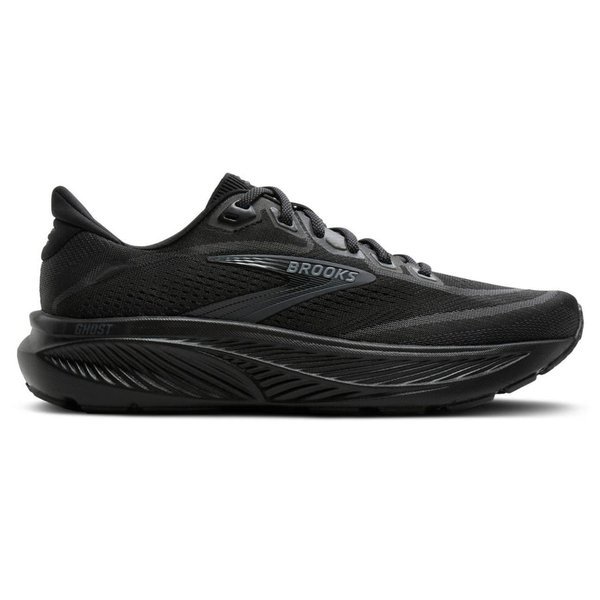
Brooks Ghost 18 (wide)
Neutral · 36/26 mm · 10 mm drop · 289 g
from €134.95 €150.00 -10%
BIKILA price on 28/10/2026; may change
See it at BIKILA →Read the review →ASICS Gel-Kayano 33: stability with plenty of cushioning
ASICS’s reference stability shoe. This is the softest Kayano so far, with less intrusive support than earlier versions. For runners who want support and comfort together.

ASICS Gel-Kayano 33
Stability · 39/31 mm · 8 mm drop · 298 g
from €179.95 €199.95 -10%
BIKILA price on 28/10/2026; may change
See it at BIKILA →Read the review →Brooks Adrenaline GTS 25: durable stability, in wide
Brooks’s most popular stability shoe, with its GuideRails system, which limits excess knee movement without forcing the foot. It stands out for durability, and its weak point is weight. BIKILA has it in a wide fit from €126.95.
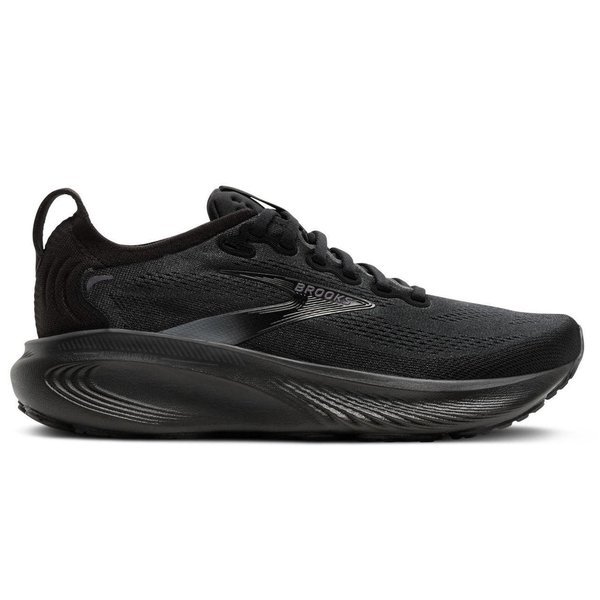
Brooks Adrenaline GTS 25 (wide)
Stability · 37/27 mm · 10 mm drop · 300 g
from €126.95 €160.00 -21%
BIKILA price on 28/10/2026; may change
See it at BIKILA →Read the review →
Other running shoes for heavy runners with plenty of cushioning
BIKILA also stocks the Brooks Glycerin 23 in wide (from €134.95), the Brooks Ghost Max 4 (from €143.95) and the HOKA Bondi 9 (from €149.90). We have not reviewed them, so we do not give their specs here. You can compare the reviewed models in our shoe comparison tool.
Looking after your shoes if you weigh more
- **Use them only for running.** Every kilometre you walk in them also wears the midsole.
- **Check the midsole, not just the outsole.** Deep creases along the sides, or a shoe that tilts when you put it on a table, mean the foam is giving way.
- **Log the kilometres** on your watch or app, so you know when to start paying attention.

Running shoes for heavy runners FAQ
At what weight do I need a special shoe?
There is no weight above which you need running shoes for heavy runners. What changes with weight is the load on the foam: you will notice wear sooner and may prefer a wider midsole.
Is more cushioning better if I weigh more?
It may feel more comfortable, but in the 2020 Malisoux trial the softer shoe did not reduce injuries in heavier runners. Choose by comfort and stability, not just by stack height.
Do I need a stability shoe?
Only if a neutral shoe feels uncomfortable or a stability shoe already works for you. Weight alone does not mean you need one.
How often should I replace them?
There is no exact figure, and with more weight the foam packs down sooner. Watch for signs of wear and for new aches; we explain it in when to replace running shoes.
Some links in this guide are affiliate links: if you buy through them, KnowPace may earn a small commission at no extra cost to you. We have not tested these models: the data comes from the brands, published lab tests and reviews, and the studies cited.