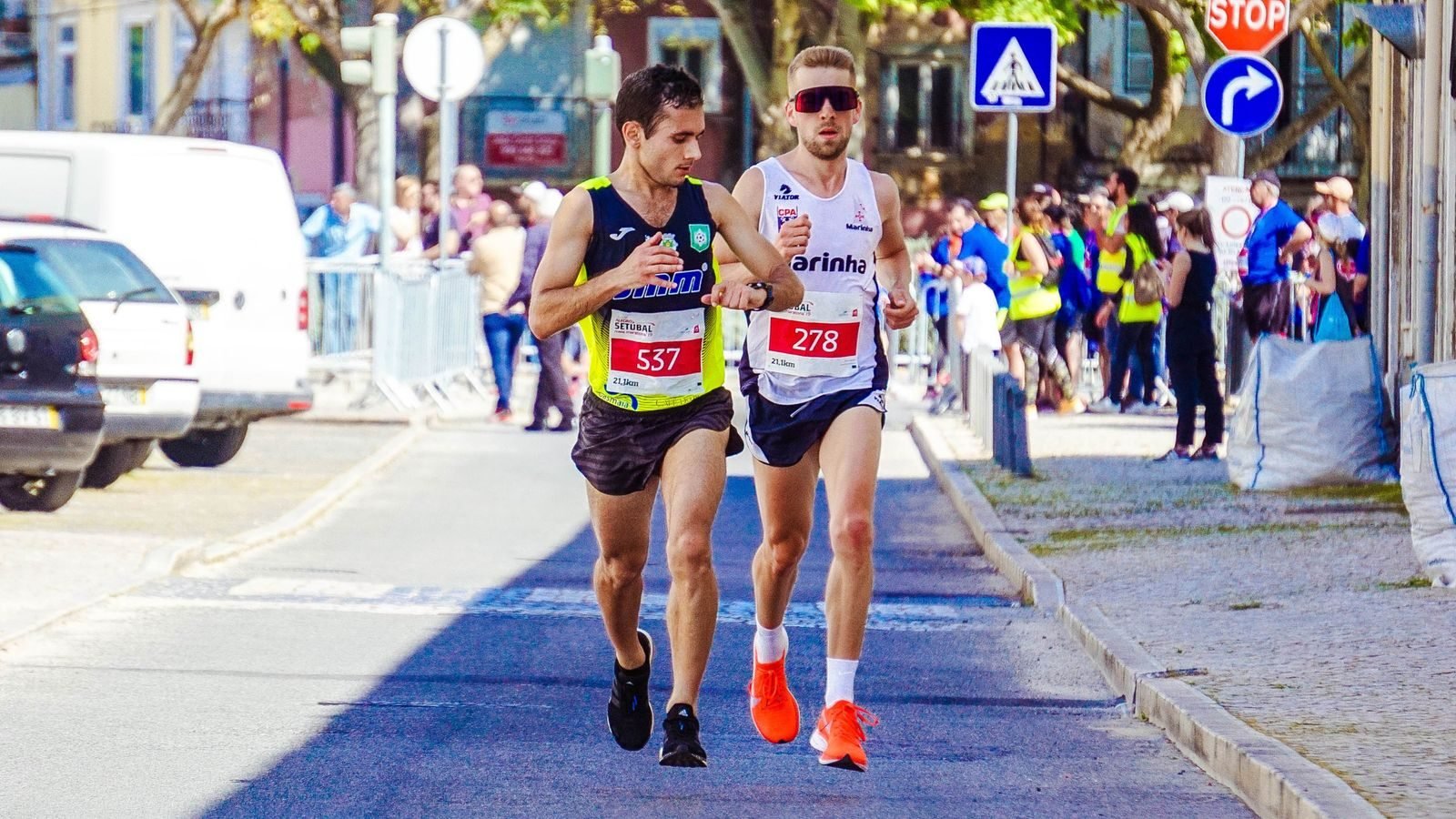
How to Train for Your First Marathon: A Complete Guide
Your first marathon is a different league. From kilometer 30 onward, glycogen, race fueling and your head all come into play, and that is where everything is decided. With organized preparation, almost any consistent runner can finish one and enjoy it. In this guide I explain what base to start from, how long a plan lasts, how to approach long runs, what to eat before and during the race, and how to pace yourself so you don’t hit the famous wall.
Before training for your first marathon
The most sensible thing is to have run a half marathon first, or at least be able to run 15 to 18 km comfortably. If you haven’t done one yet, start there; there is a guide on how to train for your first half marathon.
It also helps to have been running regularly for a few months, three or four days a week. A marathon demands that your tendons and bones handle many hours of impact, and that takes time to build, not a plan of a few weeks.
How long a plan for your first marathon lasts
For a first marathon, 16 to 20 weeks is typical. That margin lets you build volume gradually, include easier weeks and absorb the odd setback without having to rush to make up for lost time.
As for days, four a week is a good starting point, and five if you already have experience. More important than the number of days is consistency: steady weeks of moderate volume are worth more than big weeks followed by empty ones.

The long run for the marathon
This is the heart of the plan. Start from your current long run distance and build it up gradually, with an easier week every three or four. Your longest runs come between five and three weeks before the race.
How far? For a first marathon, a good cap is about 28 to 32 km, or around 2.5 to 3 hours of running, whichever comes first. Going further is hard on your legs and recovery takes too many days. I explain this in the guide on how to train in zone 2: the strongest adaptations come after the first hour and there is no need to overdo it.
Almost the whole long run is at an easy pace. In some of the last ones you can add a final block of 5 to 10 km at marathon pace, so your body learns to hold it when tired. And in every one, practice what you will eat and drink on race day.
Paces and a typical week
The bulk of your training, around 80%, is at an easy pace. Besides the long run, a typical four-day week would include an easy run, a quality session (threshold, tempo or intervals) and a medium run with some marathon pace.
Threshold work is especially useful for the marathon: blocks of 10 to 20 minutes at a “comfortably hard” pace that teach you to sustain effort. To know how fast to run each session, enter your half marathon or 10K time in the training pace calculator, and if you want to understand the zones, read the guide on training paces.
As a reference, many recreational runners finish their first marathon with peak weeks of 45 to 60 km. You don’t need more, but you do need to get there gradually. If it rises fast, injuries appear; the warning signs are in the guide on runner injury prevention.
Fueling, the other half of the marathon
Being fit isn’t enough in a marathon: if you run out of glycogen, you hit the wall and your pace collapses, usually after kilometer 30. There are three moments to look after.
Carb loading
In the two or three days before, give carbohydrates a bigger role to fill your stores. The idea is for a good part of what you eat to be pasta, rice, bread, potatoes or fruit, and to cut back on fiber and fat the last day. It is all in the guide on what to eat before a race.
Eating during the race
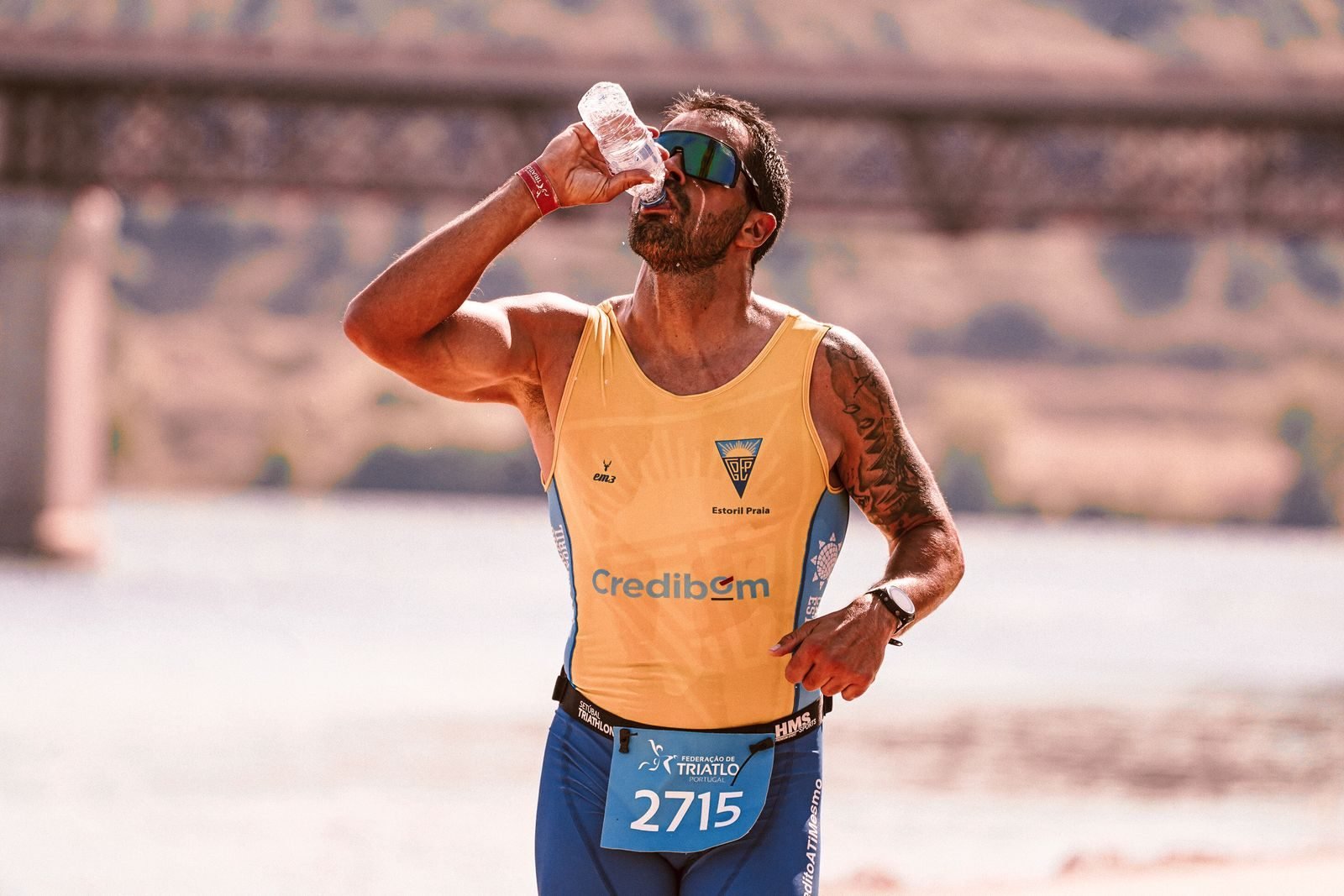
During the marathon you need to take carbs regularly from the start, without waiting until you feel empty. As a general reference, 30 to 60 grams per hour, and more if your stomach is trained. Work out your number with the race carb calculator.
That amount has to be rehearsed. If gels upset your stomach, the guide on how to train your gut explains how to get it used to them, and the one on hydration and electrolytes covers how much to drink and when to take salt.
The last weeks: tapering
Two to three weeks before the race, the volume reduction begins, known as tapering. Cut your kilometers gradually, down to half or less in the final week, but keep some marathon pace so your legs don’t go flat.
It is normal to feel heavy or full of doubts in those days. Don’t try to make up missed sessions: in those weeks you can only arrive more tired, never fitter. I explain it step by step in the guide on tapering.
How to run your first marathon
Choosing your pace
Estimate your time with the race time predictor from your half marathon, and be conservative. Marathon predictions are the least reliable, because they depend a lot on volume and fueling. In a first marathon, aim to finish well rather than for a specific time.
Pacing the effort
Start slower than you think you can run. The first half should feel easy, almost boring. The goal is to reach kilometer 30 with energy left, because that is where it gets hard. Even splits or finishing slightly faster is the safest way to avoid the wall.
Race-day logistics
Pick up your bib early, lay everything out the night before and don’t use anything new. Have the breakfast you tested on your long runs, about three hours before. And think about the heat: if it is warmer than expected, slow down from the start. If you are looking for your race, the race directory has marathons to choose from.
Conclusion
Preparing for your first marathon is a project of months. Arrive with a half marathon done, give yourself 16 to 20 weeks, train four or five days with most kilometers easy, build your long run to about 30 km without going past roughly 3 hours, train your stomach, carb load and cut volume in the final weeks. On race day, start slowly and save your strength for kilometer 30. Choose well, run better.
Frequently asked questions
How many weeks do I need to train for my first marathon?
Between 16 and 20 weeks, starting from a base where you can already run a half marathon or 15 to 18 km comfortably. If you are starting from less, make the plan longer.
What should my longest run be before a marathon?
For a first marathon, about 28 to 32 km or 2.5 to 3 hours, whichever comes first. Running the full 42 km in training isn’t necessary and recovery would take too long.
How many kilometers a week should I run for a marathon?
Many recreational runners finish their first marathon with peak weeks of 45 to 60 km. What matters is reaching that number gradually.
How many gels should I take in a marathon?
It depends on your pace and how many carbs your stomach handles. As a reference, 30 to 60 grams of carbs per hour, which with standard gels is usually one every 30 to 45 minutes. Test it on your long runs first.
What is the marathon wall and how do I avoid it?
It is the sudden slump that happens when your glycogen stores run out, usually after kilometer 30. You avoid it by carb loading, eating from the start of the race and starting at a conservative pace.