Hydration and Electrolytes: A Practical Guide for Runners
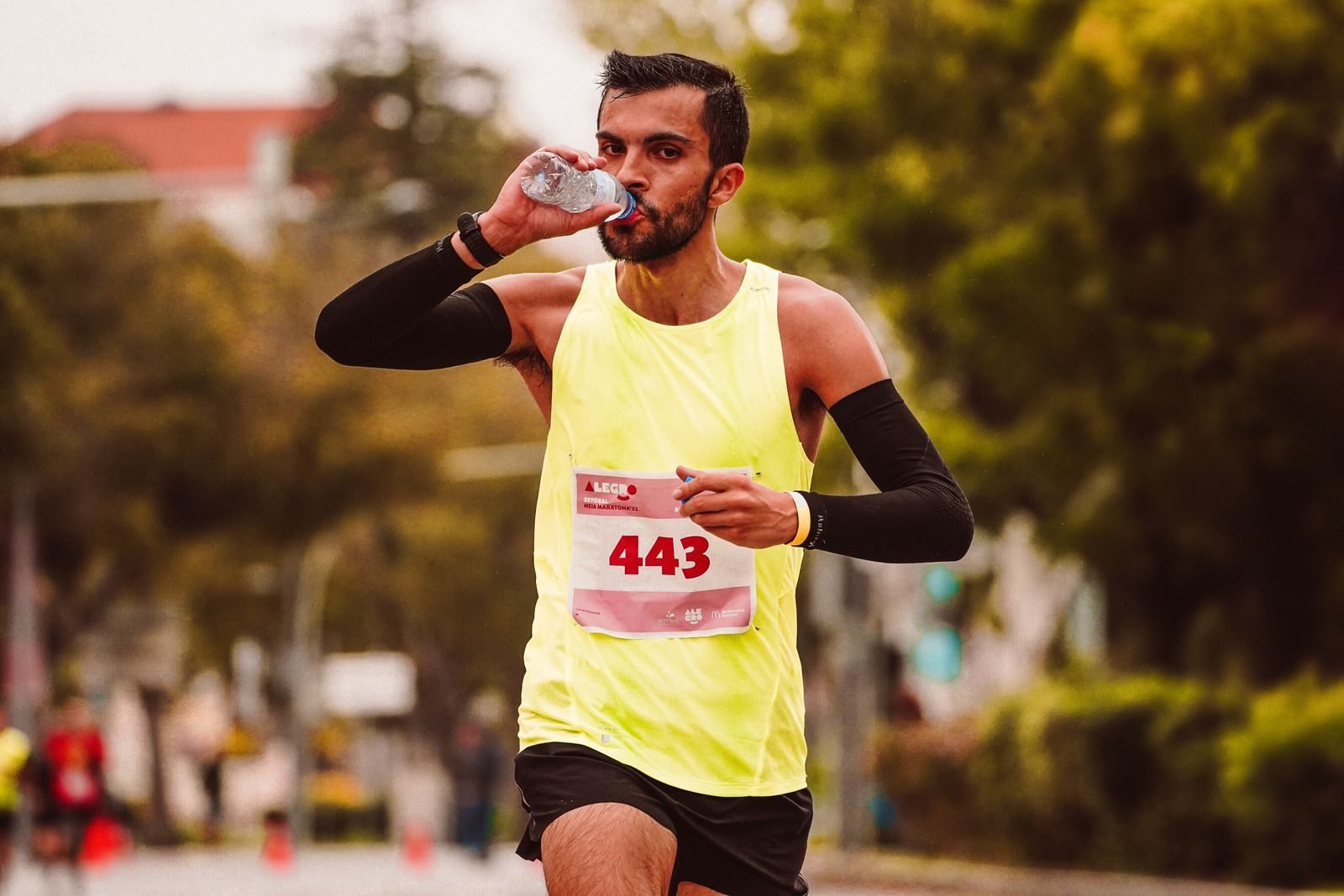
Getting hydration and electrolytes right goes a long way toward deciding how you feel in the last kilometers of a race, and yet most runners manage it by guesswork. Drink too little and you run out of strength and the cramps arrive. Drink too much, especially plain water, and there are risks too. What you want is to replace the fluid and salts you lose through sweat, no more and no less. In this guide I explain how it works, what each electrolyte does and how to build a strategy that fits you.
Why hydration and electrolytes matter so much
When you run, you sweat to regulate your temperature. With sweat you lose water and also electrolytes, minerals (sodium, potassium, magnesium, chloride) that your muscles and nerves need to work properly. If you replace the water but not those salts, the balance is thrown off anyway.
You notice the consequences. Dehydration lowers performance, brings on fatigue earlier and raises your heart rate, so the same pace costs you more. If you also lose a lot of salt, cramps, weakness and dizziness can appear. At the other extreme is too much water without sodium, the least known risk, which I cover further down.
If you are interested in the link with heart rate, I explain it in the guide on how to lower your heart rate while running.
What electrolytes are and what each one does
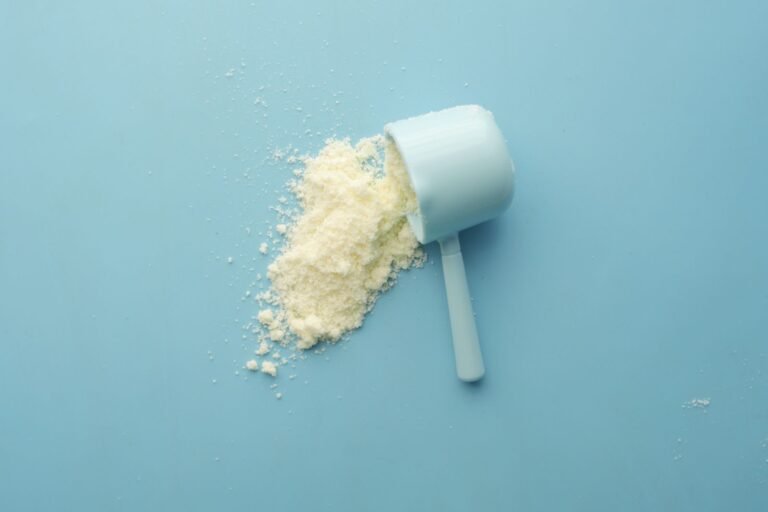
They are electrically charged minerals that regulate basic functions during exercise. Sodium is the most important one for runners. It is the one you lose most in sweat, and it helps you retain fluid and absorb water and carbohydrates. Potassium works with it in muscle contraction and fluid balance. Magnesium is involved in muscle function and energy production. Chloride and calcium complete the balance and nerve transmission.
In long races and in the heat, sodium is the one to watch most. Drinking only water doesn’t replace it.
Hydration and electrolytes: how much and when to drink
There is no magic number of milliliters, because everyone sweats very differently depending on heat, intensity and their own physiology. What there is, though, is a handful of principles that work.
Start well hydrated
Hydration starts before the gun. Drink normally in the hours before and don’t try to make up for it by downing half a liter right before the start.
Drink to thirst and to the race length
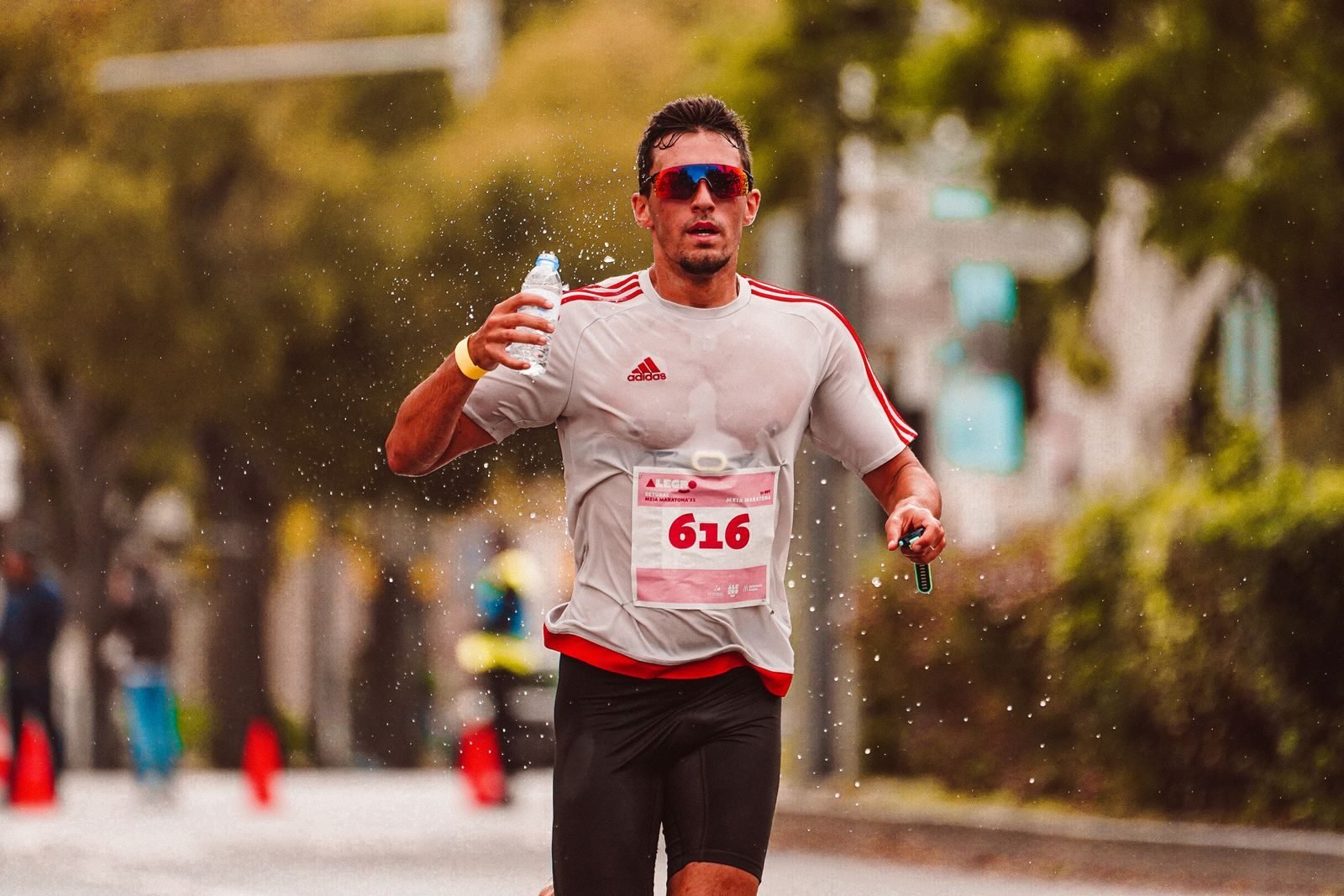
For efforts under an hour, drinking to thirst is usually enough. In longer races it makes sense to drink regularly and to a plan, without waiting until you are very thirsty but also without forcing yourself to drink more than your body asks for.
Replace sodium in long or hot races
Beyond a little over an hour, or sooner if it is very hot and you sweat a lot, water alone falls short. You need sodium, whether from a sports drink, salt capsules or gels with electrolytes. That is what helps prevent cramps and absorb fluid.
Adjust to your sweat
We don’t all lose the same amount of salt. Some runners are salty sweaters, and you can tell because the sweat stings their eyes or leaves white marks on their clothes. Pay attention to how you respond in training and adjust. Your own notes will tell you more than any generic table.
Hydration and carbs go together
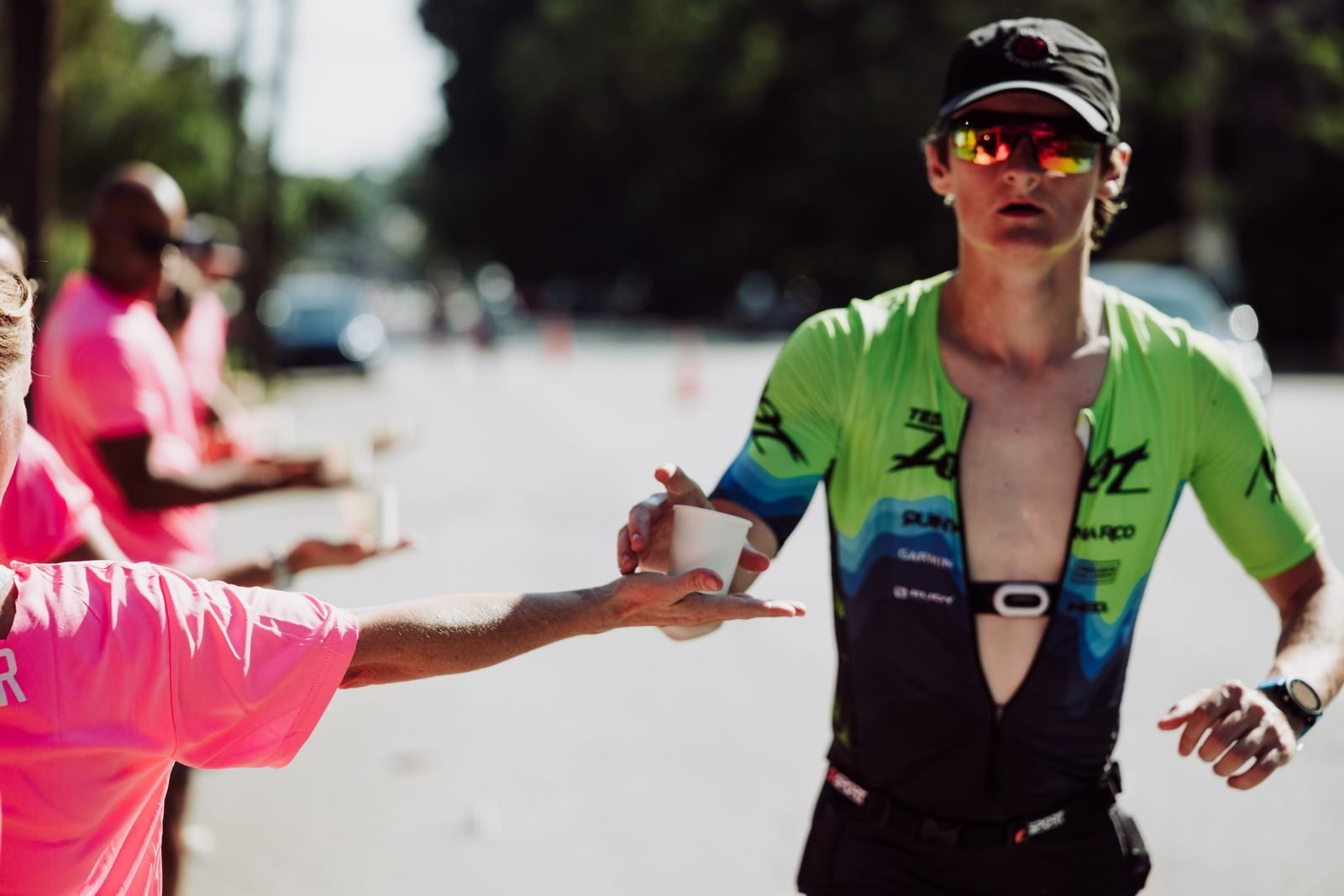
A sports drink doesn’t just hydrate you and provide salts. It usually carries carbohydrates as well, so your hydration and electrolytes plan and your energy strategy are connected and are best planned together.
To find out how many carbs you need in your race, and how to split them between drinks and gels, you can use our race carb calculator. The rest of the strategy is in the guide on what to eat before, during and after a race. And if gels upset your stomach, have a look at how to train your gut, because without water carbs are absorbed worse.
Watch out for hyponatremia
You often hear that you should drink a lot, but drinking too much water without sodium carries a real risk: hyponatremia. It is a dilution of sodium in the blood that can become serious. It is more common than it seems among recreational marathon runners who drink at every aid station “just in case”.
The way to avoid it is to apply what we have covered on hydration and electrolytes: don’t drink more than your body asks for, and pair fluids with sodium in long races. If during a long race you notice swelling in your hands or feet, nausea, a headache or confusion, stop and ask for help. This guide gives general guidelines and is not a substitute for medical advice.
If you want to go to the source, the American College of Sports Medicine publishes the reference recommendations on hydration and electrolytes during exercise.
Conclusion
Managing hydration and electrolytes well comes down to four habits: start well hydrated, drink to thirst and to the race length, replace sodium when the effort is long or it is hot, and adjust it all to how you sweat. The goal is to replace what you lose, not much less and not much more. Choose well, run better.
Frequently asked questions
How much water should I drink during a race?
There is no universal amount, because everyone sweats differently depending on heat, intensity and physiology. For efforts under an hour, drinking to thirst is usually enough. In long races it is best to drink regularly and to a plan, without forcing it.
What are electrolytes for when running?
They help, sodium above all, you retain fluid, absorb water and keep muscles and nerves working properly. Replacing them prevents cramps and the weakness that comes from losing salt in sweat, something water alone doesn’t cover.
When do I need an electrolyte drink instead of just water?
After a little over an hour of effort, or sooner if it is very hot and you sweat a lot. In those conditions it is best to use a sports drink, salts or gels with electrolytes.
Can you drink too much water when running?
Yes. Drinking too much water without replacing sodium can cause hyponatremia, a dangerous dilution of sodium in the blood. That is why you shouldn’t drink “just in case”, but replace what you lose and pair it with salts in long races.
How do I know if I lose a lot of salt when I sweat?
Notice whether your sweat tastes very salty, stings your eyes or leaves white marks on your clothes or skin. Those are signs you lose quite a lot of sodium. If so, make replacing salts a priority in your long races.