Lactate Gel: What It Is and What It Can Offer Running
Lactate gel was the nutritional sensation of the last Tour de France, and it already sounds like the next big performance revolution, on the level of 120 g of carbohydrate per hour or carbon-plated shoes. But what’s really behind it? Does it work for everyday runners, or is it laboratory smoke? In this reflection I explain what exogenous lactate actually is, what the evidence says so far and, above all, what sense it makes (or doesn’t) for recreational running and athletics. With a clear compass: separating promising theory from what is truly proven. Let’s get to it.

From Villain to Fuel: The Lactate Paradigm Shift
For decades, lactate was the bad guy of the story: it was blamed for fatigue, for the burning in your legs, for “blowing up.” The analogy people use now is the ambulance: it always shows up at the scene of the accident, so it was assumed to be the cause, when in reality it is there to help.
Science has rehabilitated it. We now know that lactate does not cause fatigue; fatigue comes mainly from the drop in muscle pH, and lactate is actually a fuel the body reuses and that even helps buffer that acidity. It is the same lactate shuttle concept popularized by George Brooks, which we already touched on in the guide to training in zone 2.
The question its creators asked was logical: if lactate is a fuel, and producing it “costs” (it requires glycolytic effort), why not ingest it directly? That is where exogenous lactate comes from: lactate you eat, instead of lactate you make.
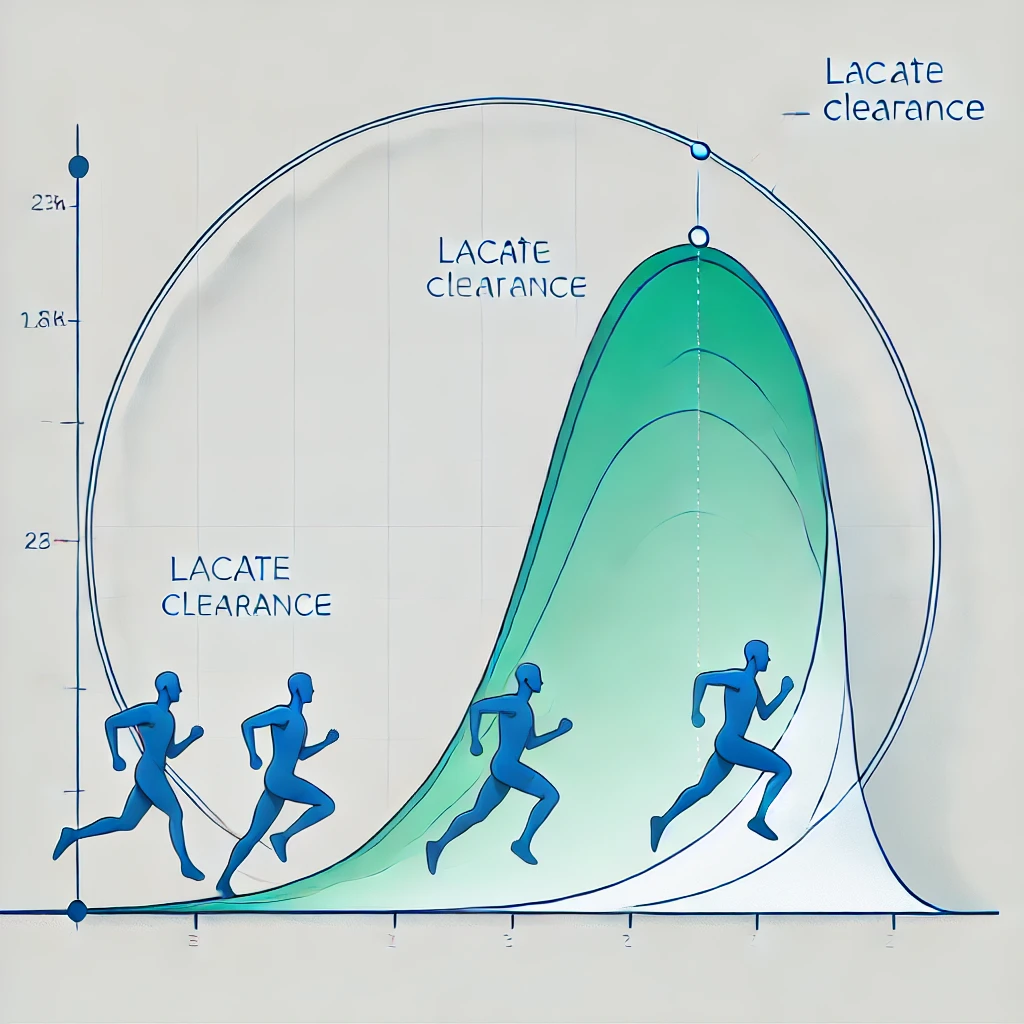
What a Lactate Gel Actually Is
The product that set off the buzz (ExoLactate, from the Basque company From Lab to Field, founded by physiologist Aitor Viribay) is, in format, a gel very similar to the ones you already know. The difference is in the formula: it combines carbohydrates with exogenous lactate.
According to the available information, each gel provides around 40 g of carbohydrate (a glucose:fructose mix) plus about 5 g of lactate, formulated at a neutral pH so it does not damage teeth or stomach. The big technical challenge for years was precisely that: managing to deliver lactate in a tolerable form and in useful amounts, something other groups had tried without success.
The theory of why it might work has three legs:
Preferred fuel: faced with lactate, glucose or fat, the body tends to draw on lactate first. Supplying it from outside could spare glycogen for the decisive stretch. Buffering effect: it would help regulate pH, delaying fatigue. Fat oxidation: there are hints that at low intensity it could favor fat use, making you more economical.
On paper, it sounds like the dream of any distance runner. But here is where we need to get our feet back on the ground.
What the Evidence Says (and Why It Pays to Be Cautious)
Here is the part many headlines skip. The theory is solid, but the evidence in humans is scarce and, above all, uneven. Let’s be honest about what there is:
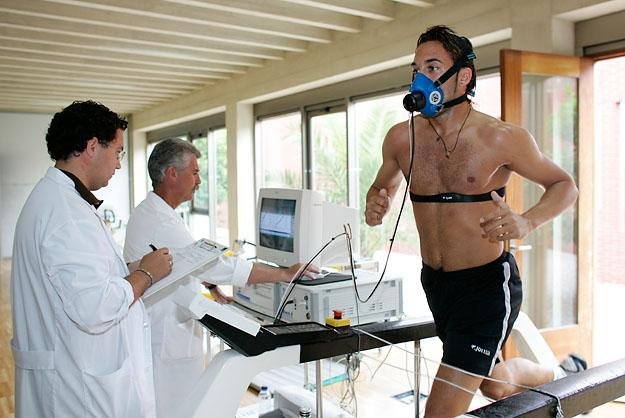
A 2024 pilot trial (double-blind, crossover) with cyclists gave oral lactate and found no improvements in VO2max, lactate threshold or ventilatory threshold. Only a modest improvement (around 4%) in a 20-minute time trial. Other studies in trained cyclists found no significant benefit in performance. The Tour reports are impressions from riders in competition (lower perceived effort, better resistance to fatigue), not results from controlled studies. In running and athletics there is even less specific data. The bulk of what is published is in cycling or in the lab.
There is a key nuance that explains much of this disparity: the dose and the chemical form matter a lot. Low doses (on the order of 14-20 mg/kg) are usually insufficient to improve performance. In contrast, some study with high loads of calcium lactate (120-300 mg/kg) did observe notable increases in time to exhaustion in cyclists. The problem: those high doses also move into gastrointestinal-trouble territory, the same Achilles heel as bicarbonate. And the type of test changes the result (a time trial is not the same as a test to exhaustion).
The creator himself admits it honestly: the real evidence is still scarce and the hypotheses are based on mechanism studies and metabolic knowledge. He describes it as a starting point, not a finish line, with years of research ahead.
A curious note also worth keeping in mind: in very high-level distance athletes it has been seen that very high endogenous blood lactate levels can worsen running economy. Circulating lactate is not the same as ingesting lactate in a controlled way, but it is a reminder that “more lactate” is not automatically “better.”
Put another way: the lactate gel today looks quite a lot like what ketones were a few years ago. The physiology was convincing, expectations were sky-high, and the real improvements in competition ended up being much smaller than promised.
So, Does It Make Sense for the Recreational Runner?
My reflection, applied to running and amateur athletics: not yet. And not because the idea is bad, but as a matter of priorities.
Think about the hierarchy of what drives your performance:
A well-structured training plan (aerobic base, threshold, sensible intervals). A carbohydrate and hydration strategy well executed and rehearsed. Rest and consistency. And far, far behind, experimental marginal gains like this one.
If you don’t yet have the first three nailed down, a lactate gel is not going to fix anything; it would be like putting an F1 wing on a car that is missing its wheels. The gains that really move your time come from training at the right paces, not from a trendy gel. In fact, most of the benefit of these gels probably comes from the carbohydrates they contain (40 g per gel), something you already get with any conventional gel used well. To work out how many carbs you really need in your event, you have the race carb calculator, and for the full framework, the guide to what to eat before, during and after a race.
There is also a principle of sports nutrition that does not change however novel the product: nothing new on race day. Any gel, and especially an experimental one, gets tested first in training. Training the gut remains the foundation, as we saw in how to train your gut to tolerate gels.
Beyond Sport: A Field That Will Run Long
Although running is what interests us here, it is worth knowing that lactate’s potential goes far beyond performance, and that explains why there is so much research underway. Lactate is a preferred fuel for the brain and heart in stress situations: during intense exercise, both organs increase their lactate consumption, sometimes ahead of glucose. In fact, its role is being studied as an energy source for the injured brain (trauma), in cognitive function and in cardiovascular health.
Why am I telling you this? Because it helps to understand that lactate is a fascinating molecule with a long scientific runway. But also because it is worth not confusing the promises of clinical research (years away) with what a gel can do today for your time in a 10K. They are different planes.
A Note of Caution
Exogenous lactate is food-grade and, to date, is not on WADA’s list of prohibited substances. But being so new, there are several loose ends: there is no standardized protocol of dose or timing for runners, there is no evidence on prolonged use, and in the carbohydrate gel market discrepancies have already been detected between what the label promises and the real content. As with any supplement, when in doubt it is best to consult a sports nutritionist, and to be wary of “revolution” promises until the evidence backs them up. Curiosity is fine; blind faith in the latest trendy product is not.
As an external reference, the scientific rehabilitation of lactate is well documented in the work of George Brooks and his lactate shuttle concept, published in journals such as The Journal of Physiology; and specialist outlets like Velo (Outside) have covered the product’s news with the voices of its creators.
Conclusion
The lactate gel is one of the most interesting developments in recent sports nutrition, and the physiology behind it is fascinating. But it pays to separate the noise from the signal:
The theory is promising: lactate is fuel, buffer and a possible glycogen-sparer. The real evidence is still scarce and mixed, and almost all in cycling, not running. For the recreational runner, today it is an experiment, not a priority: first, training, carbohydrates, hydration and rest.
Keep your curiosity, but don’t swap what works for an unproven promise. When there is solid evidence in runners, we’ll tell you about it here. Choose well, run better.
Frequently Asked Questions
What is a lactate gel?
It is an energy gel that combines carbohydrates with exogenous lactate (lactate you ingest, instead of the lactate the muscle produces when it works hard). The idea is to supply an extra fuel that the body uses preferentially and that also helps buffer muscle acidity.
Does a lactate gel improve running performance?
The theory is promising, but the evidence in humans is scarce and uneven, and almost all in cycling, not running. Some studies show modest improvements and others none. As of today there is no solid proof that it improves performance in runners.
Is it worth it for an amateur runner?
Not yet. For a recreational runner, performance depends much more on good training, a well-executed carbohydrate and hydration strategy and rest. An experimental gel does not make up for gaps in those pillars, and much of its effect probably comes from the carbohydrates it already contains.
Is exogenous lactate legal?
To date, exogenous lactate is food-grade and does not appear on WADA’s list of prohibited substances. Even so, being a very new product, it is best to consult a sports nutritionist before adding it and never to use it for the first time on race day.
Is it comparable to carbon-plate shoes?
Its creators compare it to that leap, but there is a key difference: the benefit of carbon shoes is widely documented, while that of the lactate gel is not yet. The comparison describes the expectation, not the current evidence.