How to Lower Heart Rate Running: A Guide to Gaining Efficiency
If your heart rate spikes every time you go out for a run, you are not alone: it is one of the most common questions among recreational runners. Learning to lower your heart rate running is not a data-geek obsession, but a sign that your body is becoming more efficient: you spend less to go at the same pace. The good news is that aerobic capacity, which is what rules here, has enormous room for improvement. In this guide I give you the keys that really work to lower heart rate running and, with it, gain endurance. Let’s get to it.
Why It Matters to Lower Your Pulse When Running
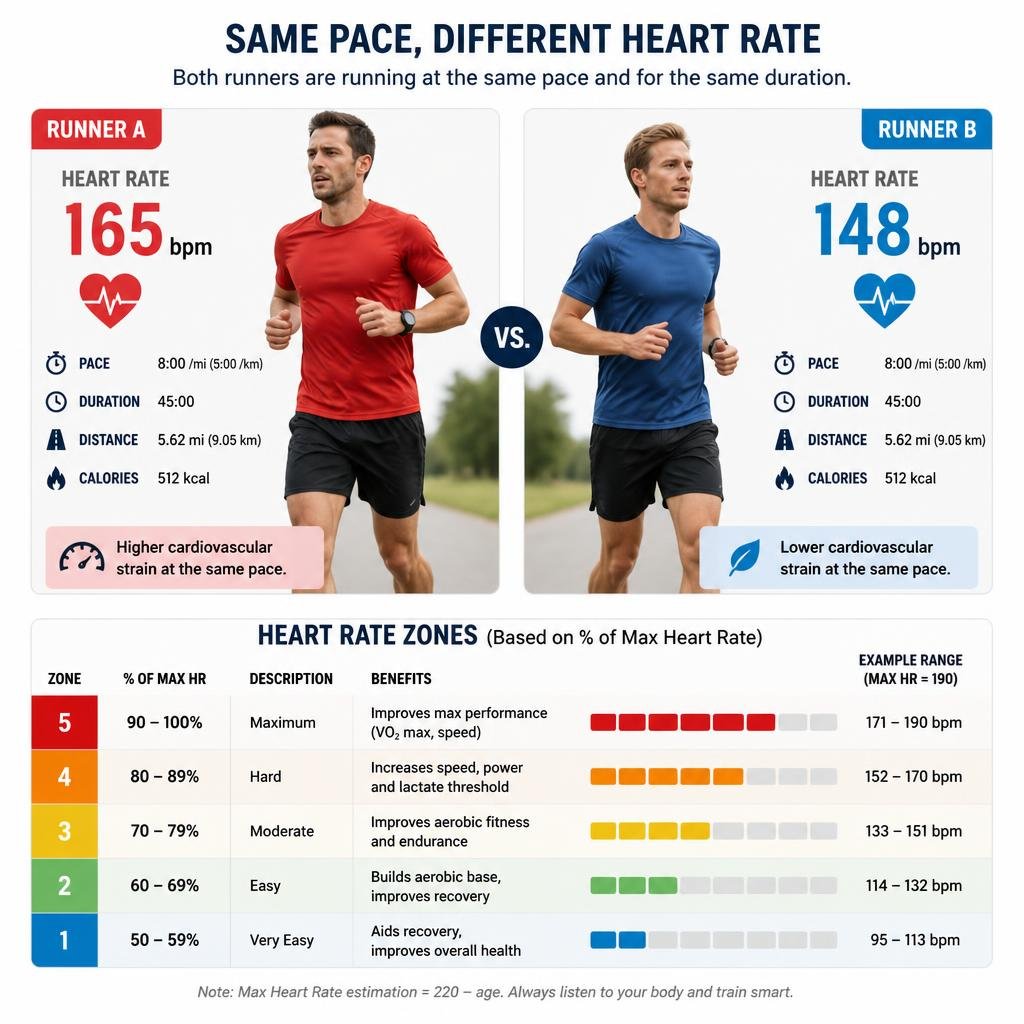
Imagine two runners going at the same pace, 6:00/km. The first one reads 165 beats per minute; the second, 148. Which is the better runner? The second, without a doubt: it costs them less to do exactly the same, they are more efficient and they will be able to last longer or run faster with the same effort.
And there is a strong reason to work on it: in distance racing, energy is overwhelmingly aerobic. In a 10K, around 90% of the energy is aerobic; in a half marathon, even more; in a marathon, practically all of it. Improving your aerobic engine, that is, lowering your pulse at a given pace, is literally improving at what decides your races.
And here is the best news: aerobic capacity has a lot of plasticity, a lot of room for improvement. Where there is less scope is in maximal oxygen uptake (VO2max), which has a more genetic component. That is why low-intensity aerobic work pays off so much.
How to Know If You’re Running in Zone 2 (and Not Faster)
The terrain where you lower your pulse is the famous zone 2: low intensity, below 80% of your maximum heart rate. There you teach your body to draw on fat, you save glycogen, you build mitochondria and you steer clear of injuries. We look at it in depth in the guide on how to train in zone 2.
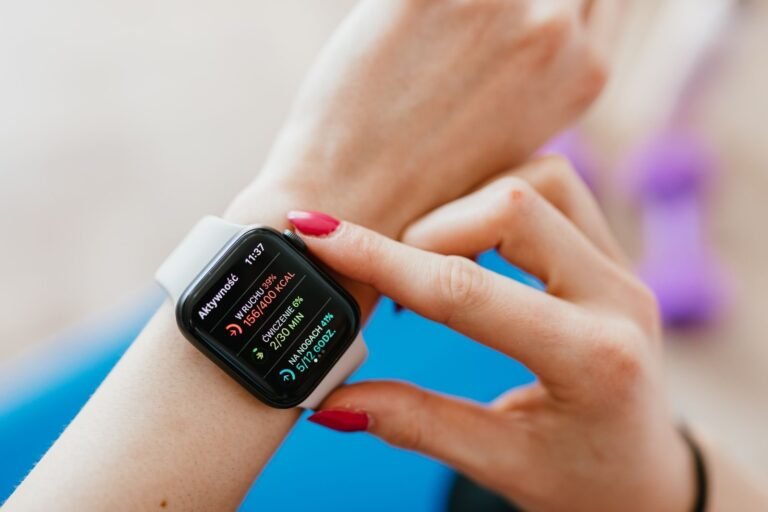
To know if you are there you have three indicators. Heart rate, which must stay below 80% of your max HR; measure it well, because chest straps (or some armbands) are far more reliable than the watch’s optical wrist sensor, which is only a rough guide and gives many spikes. Perceived exertion (RPE), which should be a 2-3 out of 10, that is, easy. And the talk test: if you can hold a conversation while running, you are in zone 2.
Watch out for your watch’s zones: many watches label as “zone 3” what is really zone 2, because they place their zone 3 at 70-80%. Check the settings: zone 1 and zone 2 should stay below 80% of your max HR.
What Cardiovascular Drift Is (and Why Your Pulse Rises at the End)
This is the phenomenon that most puzzles people: you start the run with a stable pulse and, in the final stretch, without going any faster, it spikes. It is called cardiovascular drift (cardiac drift), and it is a normal response, not a failing of yours.
Its main causes, according to the evidence, are three. Heat and the rise in body temperature, which is the main driver: the body diverts blood to the skin to cool down, the heart’s stroke volume drops and it compensates by beating faster. Dehydration, which reduces blood volume and worsens the above. And glycogen depletion in long efforts, which makes the same pace metabolically more expensive.
A useful reference figure: in well-trained runners in zone 2, a drift below 5% over one hour is a sign of good aerobic fitness; above 10% usually indicates that the pace was too high, that conditions were hard or that aerobic base is lacking.
The 6 Keys to Lower Heart Rate Running
Let’s get practical. These are the levers that really work to lower heart rate running.
The first key is to run genuinely easier. It is the most obvious and the one almost nobody respects. If your pulse spikes, it is almost always because you are going faster than you think. Drop the pace without fear: the goal is to accumulate kilometers with a calm heart. Leave the ego aside.
The second key is to use run-walk. If even going slow your pulse runs away, stop and walk briskly for 2-3 minutes, and go back to jogging. Run-walk is not just for beginners: it lets you accumulate time in zone 2 with a controlled pulse, which is precisely what drives your improvement. Many runners who start with run-walk notice progress within a few weeks.
The third key is to hydrate and replace electrolytes. Since dehydration is a direct cause of drift, looking after hydration and electrolytes is one of the most effective solutions, especially in summer. In many cases, adjusting this alone eliminates the problem of the pulse rising at the end. We develop it in the guide on hydration and electrolytes.
The fourth key is to breathe deeply and in a controlled way. Breathing influences the pulse: breathing deep and slow activates the parasympathetic system (the calming one) and helps lower heart rate; hyperventilating raises it. Trying breathing patterns (for example, inhaling over several steps and exhaling over others) can help you relax and keep your pulse in check on easy runs. An honest caveat: this effect is clear at rest and at low intensities; at high paces its impact is far more limited, so don’t see it as a magic trick, but as a help in the easy zone.
The fifth key is to progress your loads little by little. If you jump suddenly from 10 to 20 km, it is normal for your pulse to get out of control: your body has not adapted. Raise the volume gradually (a common reference is no more than about 10% per week). And prioritize accumulating training history over one-off figures: it is better to run 10 km on 3 days than to cram in 30 at once, because you absorb the stimulus much better. To adjust your easy-run paces sensibly, you have the training pace calculator.
The sixth key is to do strength work and rest, the two pillars of “invisible training.” Strength matters because your main limiter as a runner is muscular, not cardiovascular: a strong muscular system makes you more efficient and lowers the cost (and the pulse) of each stride, as well as preventing injuries. And rest because sleeping well the night before shows up directly in the next day’s pulse; with poor rest, the same run will come out with a higher heart rate.
The Underlying Key: Patience and Consistency
All of this works, but not overnight. Aerobic capacity improves a lot, but it takes time. The great enemy here is impatience: wanting to lower your pulse now. With consistency and prudence in your paces, within a few weeks you will notice that you run at the same paces with considerably less effort. If you are preparing an event, plan it from the race directory.
As an external reference, cardiovascular drift and its mechanisms are well documented in the scientific literature.
Conclusion
Lowering your heart rate running comes down to six keys: run genuinely easier, use run-walk if your pulse spikes, hydrate and replace electrolytes, breathe deep on easy runs, progress your loads little by little (around 10% per week) and do strength work and rest well.
Stop obsessing over pace and focus on accumulating kilometers with a calm heart. Within a few weeks, your pulse at a given pace will have dropped and you will be a more efficient runner. Choose well, run better.
Frequently Asked Questions
Why does my pulse spike when running even if I go slow?
The most common reason is that you are going faster than you think; the wrist sensor, moreover, is unreliable. If you really go easy and your pulse still rises in the final stretch, it is usually cardiovascular drift from heat, dehydration or glycogen depletion.
What is cardiovascular drift?
It is the progressive rise in heart rate during a long effort at a constant pace, without any increase in intensity. It is due mainly to the rise in body temperature, worsened by dehydration and, in long efforts, by glycogen depletion.
How do I lower my heart rate running?
To lower heart rate running, run easier, use run-walk if needed, looking after hydration and electrolytes, progressing volume little by little (about 10% per week), doing strength work and resting well. Deep breathing helps on easy runs. It requires consistency over several weeks.
Does controlling your breathing help lower your pulse?
Yes, at low intensities: breathing deep and slow activates the parasympathetic system and helps reduce heart rate. At high paces its effect is far more limited, so it works well as a help on easy runs, not as a solution for intense effort.
Can I trust the pulse my watch measures at the wrist?
Only as a guide. The optical wrist sensor gives many spikes and errors. For a reliable measurement, a chest strap or a specific armband is best. Also, check your watch’s zones: many mark as zone 3 what is really zone 2.