
Run Faster Without Getting Tired: The Complete Guide to Building Endurance
Learning to run faster without getting tired sounds like a snake-oil promise, but it has a solid physiological explanation and, above all, it does not involve destroying yourself in every workout. Most recreational runners believe exactly the opposite: that to build endurance you have to pile on more kilometers and more intensity, suffer more. And that is the mistake that keeps them stuck and injured. In this guide I give you the keys that really work to run faster without getting tired, backed by evidence, building endurance safely and while enjoying it. Spoiler: “no pain, no gain” does not apply here. Let’s get to it.
The Big Misunderstanding: More Suffering Is Not More Progress
Before the keys, we have to dismantle the myth. 99% of amateur runners make the same mistake: they go out running flat out almost every time, convinced that this is how they improve faster. The result is the opposite: chronic fatigue, plateaus and injuries.
To run faster without getting tired is not about grinding yourself down, but about building a bigger, more efficient aerobic engine and then fine-tuning it. Like a car: a small engine has to run at its limit to keep cruising speed and burns a huge amount; a big one holds it with ease and saves fuel. Your goal is to build that big engine. Let’s get to the six keys.

Key 1: Learn to Control Your Pace (Run Genuinely Easy)
The first and most important. Most of your kilometers should be genuinely easy: the evidence on endurance training points to around 80% of volume going at a comfortable, conversational pace.
Why? Because running easy you draw on fat as fuel, you save glycogen (the fuel that decides the end of a race) and you stimulate the creation of mitochondria, the power plants of your cells. With more mitochondria, when it is time to push, you will have what it takes.
The problem is that almost nobody runs easy enough. A practical rule: your easy runs should be around 1:20-1:30 per kilometer slower than your 10K pace. And a reliable sign that you are doing it right: your pulse rises at the start and then stabilizes at a plateau; if it keeps rising throughout the whole run, you are going too fast. Leave the ego aside: you train by training and you race by racing. To nail your exact paces, use the training pace calculator. And to understand easy work in depth, you have the guide on how to train in zone 2.
Key 2: Start Each Workout Gradually
Do you know that bad feeling in the first few minutes, when your legs feel heavy and everything is hard, until suddenly you feel good? It is completely normal and has an explanation: at the start, your muscles demand oxygen that is not yet reaching them. As you run, more blood is pumped, the muscle gets oxygenated and the good sensations arrive, usually from 15-20 minutes onward.
Hence two practical tips: warm up enough before a quality day (about 15-20 minutes), and don’t shoot out looking to hit your target pulse all at once. If you force the pulse from the first minute, you will end up with your heart rate through the roof and out of the zone you were aiming for. Let it arrive gradually. Starting easy also reduces injury risk, because your muscles are not yet ready to go fast cold.
Key 3: Eat and Hydrate So You Don’t Run Out of Fuel
Fatigue often does not come from the training, but from arriving without fuel or poorly hydrated.
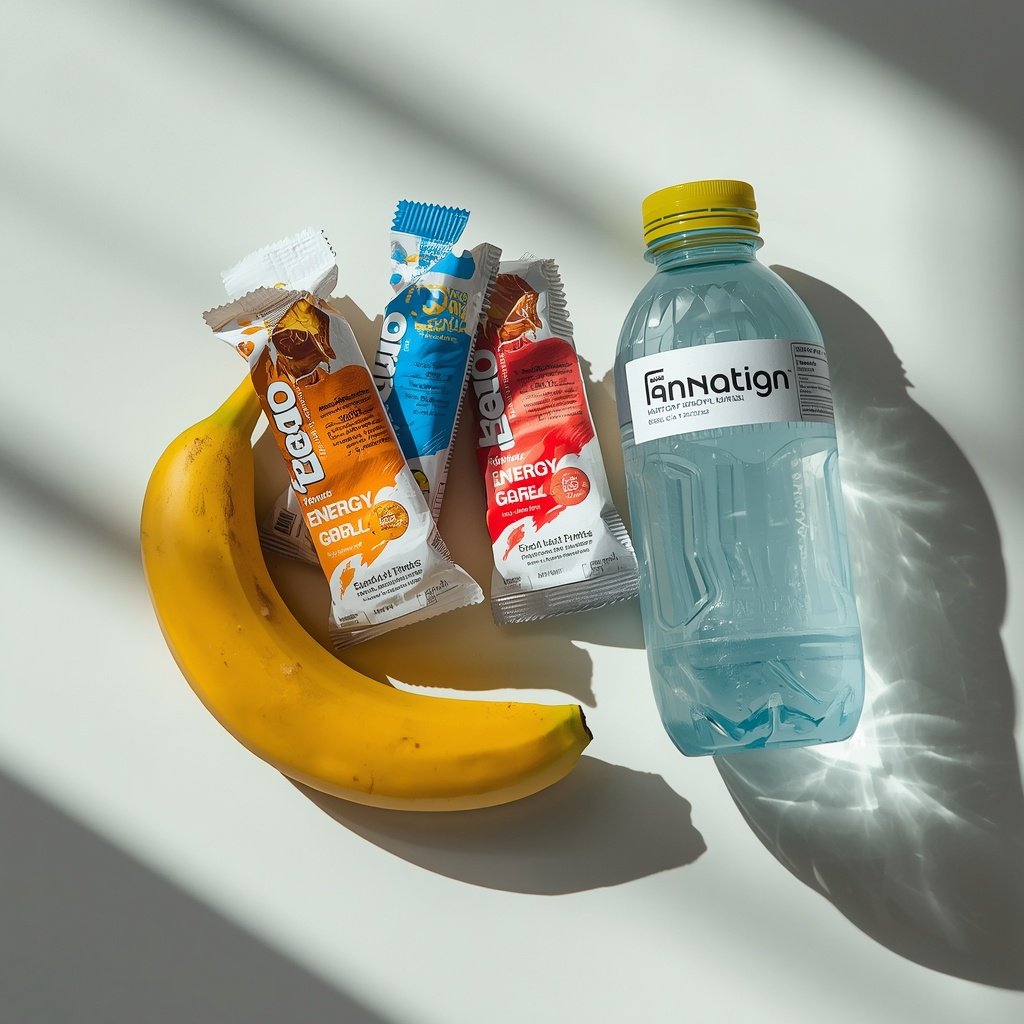
On runs of under an hour you can even run fasted if you are adapted, but well hydrated. Hydration is very underrated and makes an enormous difference, especially in summer. On longer runs it is worth putting in fuel, before (banana, toast with honey, dates) or during (gels, gummies, sports drink).
And an important message: don’t be afraid of carbohydrates. In an endurance athlete they are the main fuel; without glycogen there is no energy. Demonizing them makes sense in a sedentary person, not in a runner. We look at it in depth in the guide on what to eat before, during and after a race and in the one on hydration and electrolytes. Golden rule: none of this is tested on race day; it is rehearsed in training.
Key 4: Introduce Variability Into Your Training
Always running easy improves you, but it falls short. To build real endurance you need to vary the stimulus. A well-built week combines medium-distance easy runs (40-60 min) and easy long runs (over 60 min depending on your goal), which are the base; threshold work once a week, the “comfortably hard” pace (around 20 s/km slower than your 10K), which builds the most endurance and is why it is only one session a week; and intervals as the icing on the cake, at high paces to stimulate your maximal oxygen uptake, but introduced mainly as competition approaches, once you have the base built.
The structure resembles the polarized model: lots of easy volume, a pinch of quality, little in the “gray zone.” To organize the zones and quality days, you have the guide on how to calculate your training paces.
Key 5: Don’t Skip Strength
Strength training is the cornerstone of the plan, not an optional extra. A body that is not strong breaks down. With one or two sessions a week you gain health, avoid imbalances, reduce injuries and even improve your running technique (which is built more in the gym than with technique drills). It does not have to be explosive or risky: controlled, safe work. Strength gives you continuity, and continuity is what makes you improve. It links with what we saw in runner injury prevention.
Key 6: Look After “Invisible Training” and Your Mind
What happens outside of running also trains you. There are three pillars. Rest: sleeping 7-8 hours is not being lazy, it is when your body regenerates, the best recovery tool there is and free on top of that. Consistent nutrition and hydration, not just on long-run day. And the mind, because running is very mental: tricks like breaking a long run into blocks (thinking 4×5 km instead of 20 km), varying routes, running with company sometimes and alone others, or using music on easy runs, make training more bearable and sustainable.
A useful note: run-walk is not just for beginners. Breaking up a long run with short walks lowers injury risk and keeps much of the benefit; an underrated tool for tired days.
How It All Fits Together: The Conscious Runner
The underlying idea is to stop thinking about “suffering more” and start thinking about training better. A runner who adjusts pace, varies the stimulus, eats and hydrates well, does strength work and rests improves within a few weeks and without getting injured. And they end up racing faster than they train, because their engine is fine-tuned.
If you are preparing a specific event, choose your target in the race directory and build backward from that date. As an external reference, the research on the importance of aerobic volume and intensity distribution is well documented in the scientific literature.
Conclusion
To run faster without getting tired comes down to six keys: run genuinely easy for most of your kilometers, start each session gradually to give the muscle time to oxygenate, eat and hydrate well without fearing carbohydrates, vary the stimulus (base, threshold and intervals as the icing), do strength as your continuity insurance, and look after rest and the mind, the invisible training.
Forget “no pain, no gain.” Be a conscious, intelligent runner, and you will notice the results from your very next workout. Choose well, run better.
Frequently Asked Questions
Can you run faster without getting tired?
Yes. The key is not to train harder, but to build a big, efficient aerobic engine by running easy most of the time, and fine-tune it with quality work. A powerful aerobic system lets you hold faster paces with less effort.
At what pace should I do easy runs to improve?
As a guide, around 1:20-1:30 per kilometer slower than your 10K race pace. A good sign that you are on track is that your pulse stabilizes at a plateau instead of rising nonstop throughout the run.
Why do I feel bad at the start of a run and then improve?
It is normal: at the start, your muscles are not yet receiving all the oxygen they demand. As you run, more blood is pumped and the muscle gets oxygenated, and the good sensations usually arrive around 15-20 minutes. That is why it is worth starting easy and warming up well.
Do I need to do intervals to build endurance?
Intervals help, but they are the icing, not the base. First you build endurance with easy runs and threshold work; high-intensity intervals are introduced mainly as competition approaches. Basing all your training on intervals usually leads to plateaus and injury.
What is invisible training?
It is everything that improves your performance outside of running: sleeping 7-8 hours, keeping good nutrition and hydration consistently, and looking after the mental side. It is underrated, but it makes an enormous difference, especially in demanding buildups.