Running in the Heat and Cold: How to Adjust Pace, Dress and Stay Safe
Running in the heat is one of the situations that hurts performance most and, if you aren’t careful, your health too. The cold, on the other hand, is easier to handle, but it has its own tricks so you are neither too cold nor too hot. In this guide I explain what happens to your body when running in the heat, how to adjust your pace, how to acclimatize and which warning signs to watch for, and then how to dress and train when it gets cold.
What happens to your body when running in the heat
To cool down, your body sends more blood to your skin and sweats. That blood is no longer going to your muscles, and sweating makes you lose fluid and salt. The result is that your heart has to beat faster to hold the same pace, a phenomenon called cardiac drift that I explain in the guide on how to lower your heart rate while running.
That is why, in the heat, the same pace costs more and your heart rate climbs. And humidity makes it worse, because sweat evaporates less and cools you less.
How to adjust your pace when running in the heat
The most useful rule is to run by effort or heart rate, not pace. If your easy runs are usually at 6:00 and in the heat your heart rate shoots up, slow down until you are back in your usual zone, even if that is 15 or 30 seconds per kilometer slower. You can work out your zones with the heart rate zone calculator.
In quality sessions, shorten the intervals or lengthen the recoveries, and in races, start slower than planned. Trying to hold the pace of a cool day is the fastest way to end badly.
How to acclimatize to running in the heat
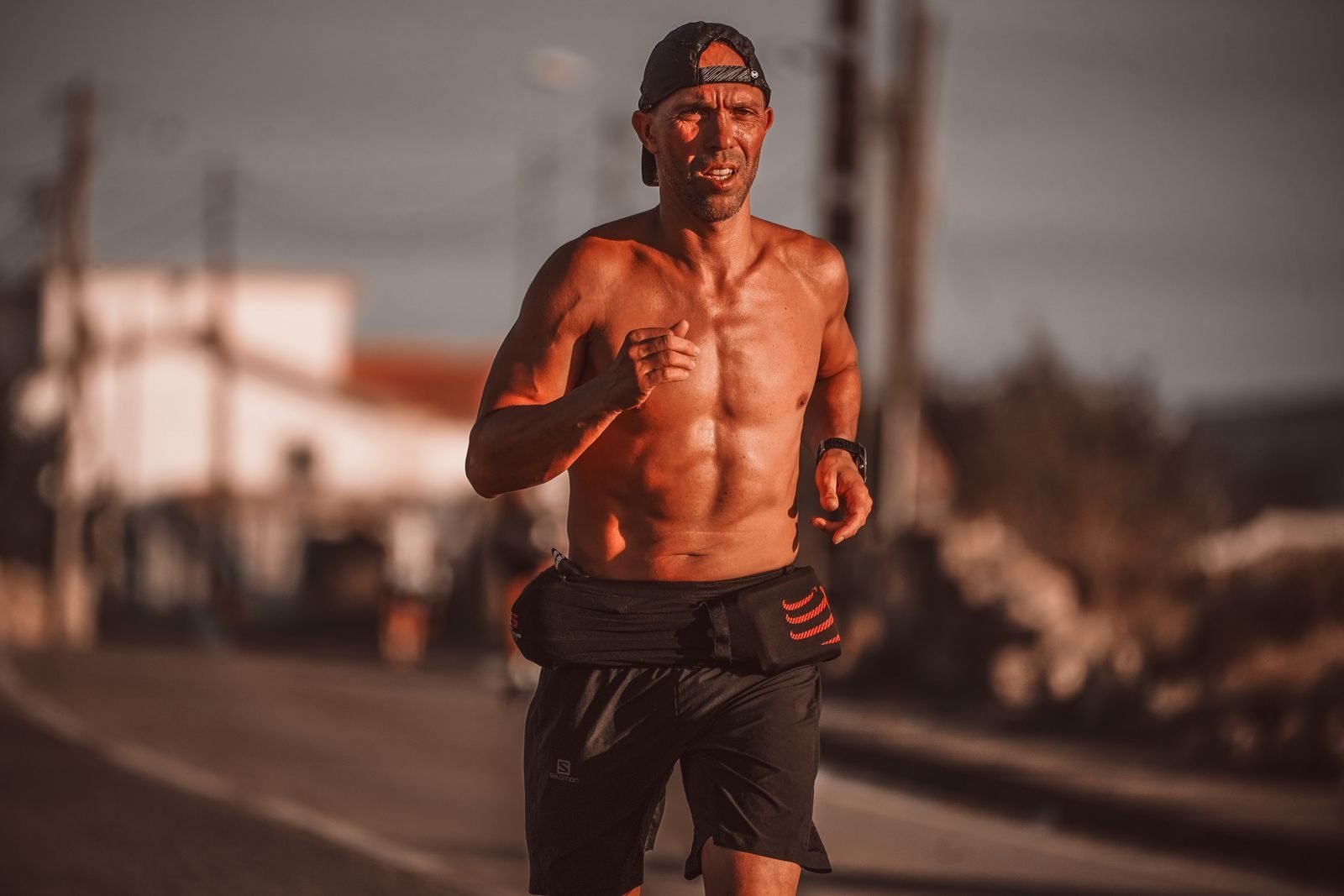
Your body adapts to heat. After about 10 to 14 sessions of exercise in the heat, you start sweating earlier and more, lose less salt and your heart rate rises less. If you have a race somewhere hot, train in the heat gradually in the weeks before, starting with short, easy sessions.
Meanwhile, choose cool times of day, early morning or late evening, look for shade, wear light, breathable clothing, a cap and sunglasses, and sunscreen.
Hydration in the heat
Drink before you go out, carry water if you will be out for more than 45 to 60 minutes and replace salt on longer runs too, because you lose a lot of sodium in sweat. It is all in the guide on hydration and electrolytes. Weigh yourself before and after a long run in the heat: if you lose more than 2% of your weight, you need to drink more.
Warning signs
Stop and find shade if you feel dizzy, nauseous, have a bad headache, chills in the heat, goosebumps or cramps. If confusion or disorientation appears, or you stop sweating with very hot skin, it may be heat stroke: it is a medical emergency, call for help and cool the person down as fast as possible.
Running in the cold
The cold is kinder: with good clothing, you can run well down to fairly low temperatures. Layers are what matter. A technical base layer that wicks sweat, a thermal mid layer if it is very cold and an outer windproof or waterproof layer. When you head out you should feel a little cold; within ten minutes you will warm up.
Protect the areas that lose most heat: head, ears, hands and neck, with a hat, gloves and a neck gaiter. Warm up for longer, start slower and, if it is windy, head out into the wind so you come back with it behind you once you are sweaty.

Precautions in the cold
Watch out for ice: slow down, shorten your stride and avoid intervals on slippery surfaces; the treadmill is a good alternative, as I explain in the guide on treadmill running. Keep drinking water, because you still sweat in the cold and feel less thirsty. And change clothes as soon as you finish so you don’t get cold in wet gear. If you have asthma or heart problems, check with a doctor before training in very low temperatures.
Conclusion
Running in the heat means slowing down and going by effort or heart rate, acclimatizing gradually, choosing cool times, hydrating with water and salt and knowing the signs of heat stroke. In the cold, dress in layers, protect your head and hands, warm up longer and watch out for ice. Choose well, run better.
Frequently asked questions
How much should I slow down when running in the heat?
It depends on temperature, humidity and your acclimatization. The practical approach is to go by heart rate or effort and slow down as much as needed to stay in your usual zone.
How long does it take to acclimatize to the heat?
About 10 to 14 sessions of exercise in the heat, spread over one or two weeks, starting with short, easy sessions.
What are the symptoms of heat stroke when running?
Confusion, disorientation, severe dizziness, nausea and very hot skin, sometimes without sweating. It is a medical emergency: stop, call for help and cool the person down.
How should I dress for running in the cold?
In layers: a technical layer that wicks sweat, a thermal layer if it is very cold and a windproof shell. Add a hat, gloves and a neck gaiter, and start out feeling slightly cold.
Is it bad to run in very cold weather?
For most healthy people, no, with the right clothing. Watch out for ice and check with a doctor first if you have asthma or heart problems.