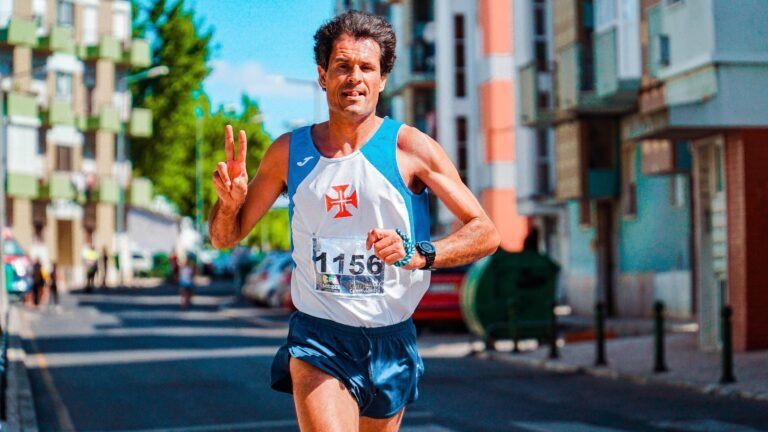
Sleep and Running Performance: Why Good Sleep Makes You a Better Runner
The link between sleep and running performance is more direct than many runners think. We take care of our plan, shoes and diet, yet sleep six hours and expect to perform the same. Sleep is when your body recovers from training, and too little shows in your paces, your mood and your injury risk. This guide explains what studies say, how much sleep you need and which habits help.
What studies say about sleep and running performance
More sleep improves performance
In a study at Stanford University, Mah and colleagues asked college basketball players to try to sleep ten hours a night for several weeks. They slept almost two hours more on average than before, and their timed sprint dropped from 16.2 to 15.5 seconds. Shooting accuracy also improved, reaction time fell and their sense of vigour and wellbeing rose. The players were not runners, although the message applies to any sport.
Too little sleep raises injury risk
In a study of adolescent athletes, Milewski and colleagues found that those who slept less than eight hours were 1.7 times more likely to have been injured than those who slept eight or more. It is an association study in young people and does not prove cause; it does point the same way as the rest.
Lack of sleep hampers recovery
The review by Fullagar and colleagues on sleep and athletic performance reports that sleep loss affects the physiological and cognitive functions that matter in training: perceived effort, mood, attention and recovery.
Sleep and running performance: how many hours you should sleep
For healthy adults, the American Academy of Sleep Medicine and the Sleep Research Society recommend sleeping seven hours or more a night on a regular basis, according to their consensus statement. If you train regularly, it makes sense to aim for the upper end of that range, especially in your biggest weeks.
If you train early, go to bed earlier rather than cutting sleep. A short nap of 20 to 30 minutes can help make up for a bad night.
Habits for better sleep and running performance
- Regular hours: go to bed and get up at similar times, weekends included.
- A dark, cool, quiet bedroom. An eye mask or earplugs help if you cannot control it.
- Screens out of bed: the light and stimulation from your phone delay sleep.
- Careful with caffeine: avoid it in the afternoon if you struggle to sleep. There is more on its effects in the guide to caffeine for runners.
- A light dinner, not too late, and go easy on alcohol, which worsens sleep quality.
- If you train in the evening, leave time to wind down before bed.

Sleep and running performance: signs of overtraining
Persistently poor sleep, waking up tired or a resting heart rate higher than usual can be signs that you are training more than you can absorb. The signs are in the guide to overtraining in runners and how to measure your pulse in the one on resting heart rate.
Sleep and running performance the night before a race
In the link between sleep and running performance, the night before a race matters less than it seems: it is normal to sleep badly because of nerves. What matters most are the nights of the week before, so sleep well during your taper and do not worry if the last night is not perfect. I explain it in the guide to tapering before a race.

Conclusion
Sleep and running performance go hand in hand: sleeping more improved speed and wellbeing in athletes in a Stanford study, and sleeping less than eight hours was associated with more injuries in young people. Aim for seven hours or more a night, more in heavy training weeks, with regular hours, a dark and cool bedroom and caffeine kept away from the afternoon.
FAQ
How many hours should a runner sleep?
Seven hours or more a night, as recommended by the sleep medicine societies’ consensus for adults. In heavy training weeks, aim for the upper end.
Does lack of sleep affect running performance?
Yes. Sleep loss worsens perceived effort, mood and recovery, and in a study of young athletes it was associated with more injuries.
Are naps good for runners?
A short nap of 20 to 30 minutes can help make up for a bad night without affecting your night-time sleep.
What if I sleep badly the night before a race?
It is normal and usually has little effect. What matters most is having slept well on the nights before.
Is training at night bad for sleep?
Some people find it hard to sleep after hard evening training. If that is you, leave time to wind down or move hard sessions to another time.