Running Shoes for Overpronation 2026: What Trials Say and 5 Models
Running shoes for overpronation, which brands call stability shoes, have a midsole that limits how far the foot rolls inward on landing. Below are the five running shoes for overpronation that BIKILA sells in 2026, with their lab data and price. First, two trials that measured whether they prevent injuries in runners with pronated feet.
What trials say about running shoes for overpronation
If you want to know what pronation is and whether to choose shoes by foot type, we cover it in running shoes and pronation. The two studies in this section compare running shoes for overpronation with neutral shoes in runners with different foot types.
The Luxembourg trial with 372 runners
In the trial by Malisoux and colleagues (British Journal of Sports Medicine, 2016), 372 recreational runners were randomly given the standard or the motion control version of the same shoe, without knowing which one they had. They were followed for six months.
- Across the whole group, the motion control shoe was linked to a 45% lower injury risk.
- Split by foot type, the effect only appeared in the 94 runners with pronated feet: 66% lower risk.
- In neutral and supinated feet there were no significant differences.
- In the standard shoe, pronated runners got injured more often than runners with neutral feet.
Which injuries went down
A later analysis of the same trial (JOSPT, 2021) looked separately at injuries usually linked to pronation: Achilles tendinopathy, plantar fasciopathy, exercise-related lower leg pain and pain at the front of the knee. With motion control, the risk of those injuries was 59% lower. Other injuries showed no effect.
It is a single trial, with 25 injuries of that type in total, the foot type analysis was secondary and today’s shoes are not the ones they used. Within those limits, it suggests running shoes for overpronation help runners with clearly pronated feet; neutral feet got no measurable benefit. If you already deal with one of those injuries, see plantar fasciitis, Achilles tendinitis and shin splints.

How running shoes for overpronation work in 2026
Classic running shoes for overpronation had a medial post, a wedge of firmer foam on the inner side. The five models in this guide replace it with the shape of the sole and foams of different firmness:
- Sidewalls that rise on both sides of the foot, like Brooks GuideRails or Saucony CenterPath.
- A frame in the midsole that cradles the foot, like the HOKA H-Frame.
- A wider base with a firmer foam layer on the inner side, like FluidSupport in the Kayano 33 or the 3D Guidance System in the GT-2000 15.
What to look for in running shoes for overpronation
- If a stability shoe rubs your arch in the store, it will not get better with miles. Try it at the end of the day with your running socks.
- Some models give gentle support, like the GT-2000 or the Arahi, and others more hold, like the Kayano. With mild pronation, it makes sense to start with the gentle ones.
- Drop ranges from 6 mm in the Guide 19 to 10 mm in the Adrenaline GTS 25. If you come from a 10 mm shoe, going down to 6 mm can load your calves and Achilles more at first. More in drop, cushioning and carbon plate.
- If you have wide feet, BIKILA sells the Adrenaline GTS 25 and the Guide 19 in a wide fit. For sizing, see the running shoe size guide.
- If you weigh more than average, there is a separate guide to running shoes for heavy runners.

5 running shoes for overpronation in 2026
These five running shoes for overpronation are daily trainers, sold at BIKILA in men’s and women’s versions. Stack heights and weight are RunRepeat lab measurements in a men’s US 9. Drop is each brand’s official figure. The score is RunRepeat’s, out of 100.
| Model | Stability system | Heel / forefoot stack | Drop | Weight | RunRepeat score |
|---|---|---|---|---|---|
| ASICS GT-2000 15 | 3D Guidance System | 38.2 / 30.0 mm | 8 mm | 252 g | 91 |
| ASICS Gel-Kayano 33 | FluidSupport | 36.8 / 28.3 mm | 8 mm | 298 g | 86 |
| Brooks Adrenaline GTS 25 | GuideRails | 36.1 / 25.9 mm | 10 mm | 295 g | 86 |
| Saucony Guide 19 | CenterPath | 37.4 / 31.4 mm | 6 mm | 298 g | 84 |
| HOKA Arahi 9 | H-Frame | 38.0 / 27.7 mm | 8 mm | 278 g | 79 |
None of them has a plate. We have not tested them: the data comes from the brands, the RunRepeat lab and the published reviews we cite.
ASICS GT-2000 15: the lightest and RunRepeat’s top score
This is ASICS’s moderate stability shoe. This version brings the softer FF Blast Max foam and weighs 252 g, the least of the five. In the RunRepeat lab it scored 91, with better energy return, flexibility and durability than the 14. Its support is gentle and the toe box a little snug: if you need more hold, RunRepeat suggests moving up to the Kayano 33.
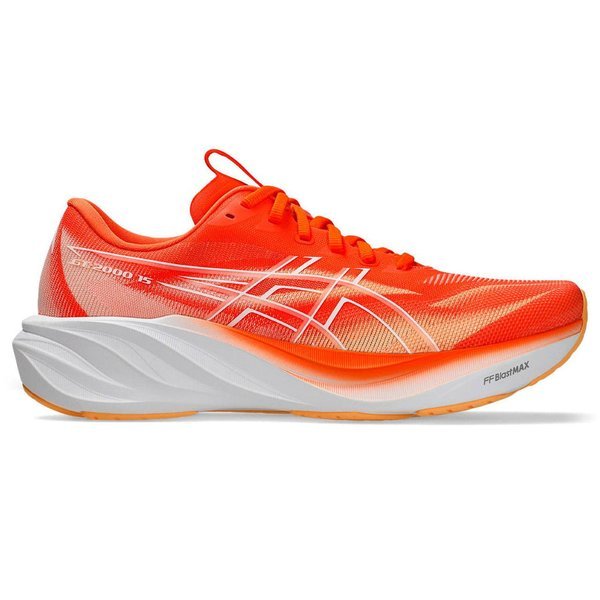
ASICS GT-2000 15
Gentle stability · 38.2/30.0 mm · 8 mm drop · 252 g
from €149.95
BIKILA price on 01/11/2026; may change
See it at BIKILA →Read the review →ASICS Gel-Kayano 33: the most support
The Kayano 33 swaps the 4D Guidance System for FluidSupport, with a softer foam, and RunRepeat measured slightly less correction than in the 32. Even so, it gives the most hold in this list and is the most expensive, aimed at runners who want support and comfort together.
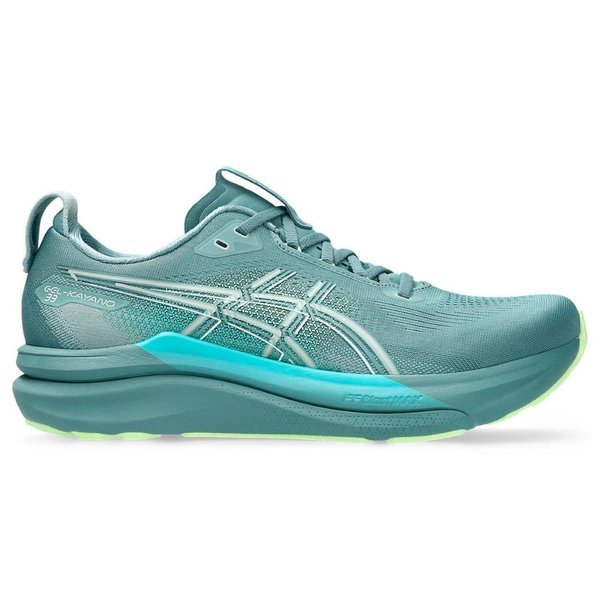
ASICS Gel-Kayano 33
High stability · 36.8/28.3 mm · 8 mm drop · 298 g
from €179.95 €199.95 -10%
BIKILA price on 01/11/2026; may change
See it at BIKILA →Read the review →Brooks Adrenaline GTS 25: the classic 10 mm option
Its GuideRails system limits how far the knee moves inward. It stands out for durability and for a 10 mm drop, the highest of the five, which suits runners coming from traditional shoes. BIKILA also has it in a wide fit.

Brooks Adrenaline GTS 25
Moderate stability · 36.1/25.9 mm · 10 mm drop · 295 g
from €135.95 €160.00 -15%
BIKILA price on 01/11/2026; may change
See it at BIKILA →Read the review →Saucony Guide 19: the low drop option
Saucony lists it at 275 g and 6 mm of drop (35/29 mm) on its website, although RunRepeat weighed it at 298 g. It has a very wide platform, a PWRRUN foam softer than in the Guide 18 and a flexibility that is unusual in a stability shoe. Its weak points are the weight and a foam that is no longer among the most modern. With a 6 mm drop it suits midfoot strikers better than heavy heel strikers. Some colors from last season are cheaper at BIKILA.

Saucony Guide 19
Moderate stability · 37.4/31.4 mm · 6 mm drop · 298 g
from €135.95 €159.95 -15%
BIKILA price on 01/11/2026; may change
See it at BIKILA →Read the review →HOKA Arahi 9: the new one this season
The Arahi 9 is this season’s model at BIKILA. It keeps the H-Frame, a frame in the midsole that centers the foot without a wedge, and adds a tougher rubber. Doctors of Running describe it as firm and stiff, better for walking and easy runs than for faster paces, with a slightly tapered toe box. RunRepeat gives it 79: it praises the stability and durability, and criticizes the low bounce and the weight gain over the Arahi 8. HOKA lists an 8 mm drop, but the lab measured 10.3 mm.

HOKA Arahi 9
Moderate stability · 38.0/27.7 mm · 8 mm drop · 278 g
from €159.95
BIKILA price on 01/11/2026; may change
See it at BIKILA →Read the review →
Cheaper running shoes for overpronation
To pay less for running shoes for overpronation, you can buy the previous generation while sizes last. Of the five, the one with the most sizes right now is the ASICS GT-2000 14, about €40 below the 15. According to RunRepeat, the 15 is lighter and bouncier; the 14 keeps the gentle support and the 8 mm drop.
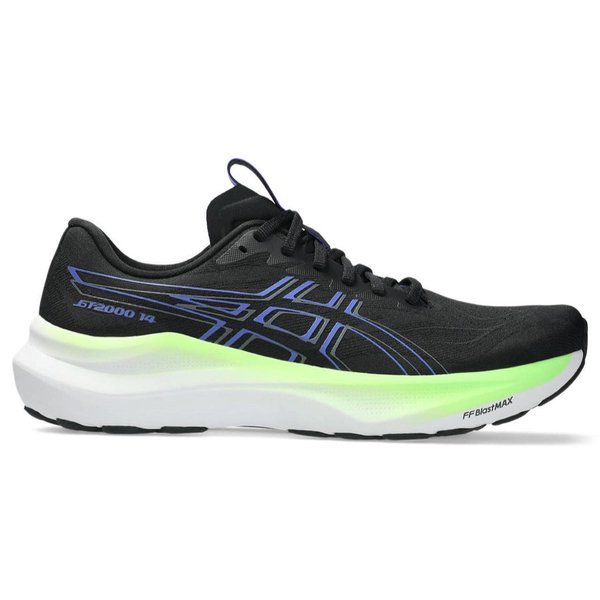
ASICS GT-2000 14 (previous generation)
Gentle stability · 8 mm drop · last season
from €109.95 €160.00 -31%
BIKILA price on 01/11/2026; may change
See it at BIKILA →Occasional discounts on these models show up on our running deals page.
Women’s running shoes for overpronation
All five running shoes for overpronation in this guide come in a women’s version, with the same technology and an adapted fit:
- Women’s ASICS GT-2000 15
- Women’s ASICS Gel-Kayano 33
- Women’s Brooks Adrenaline GTS 25
- Women’s Saucony Guide 19
- Women’s HOKA Arahi 9
You can see every stability model in BIKILA’s collections of men’s stability shoes and women’s stability shoes. To compare these models with neutral ones, use the shoe comparison tool.

FAQ about running shoes for overpronation
How do I know if I need running shoes for overpronation?
There is no definitive test. If in neutral shoes you notice your foot rolling inward, the inner edge of the outsole wears much faster, or you get pain in the arch or along the inner shin, a stability shoe is a reasonable choice. In the Malisoux trial, the benefit only appeared in clearly pronated feet.
Can a neutral runner wear running shoes for overpronation?
Yes, if they feel comfortable. In the same trial, runners with neutral feet were neither more nor less injured in the motion control shoe. Gentle support models such as the GT-2000 15 feel quite close to a neutral shoe.
What is the difference between the GT-2000 and the Kayano?
Both are ASICS stability shoes. The GT-2000 15 weighs 46 g less, costs less and has gentle support; the Kayano 33 holds the foot more. RunRepeat suggests moving to the Kayano if the GT-2000 falls short on support.
How often should I replace running shoes for overpronation?
The wear signs are the same as in neutral shoes. You can find them in when to replace running shoes.
Some links in this guide are affiliate links: if you buy through them, KnowPace may earn a small commission at no extra cost to you. We have not tested these models: the data comes from the brands, the RunRepeat lab, published reviews and the studies cited. BIKILA prices checked on 1 November 2026.